
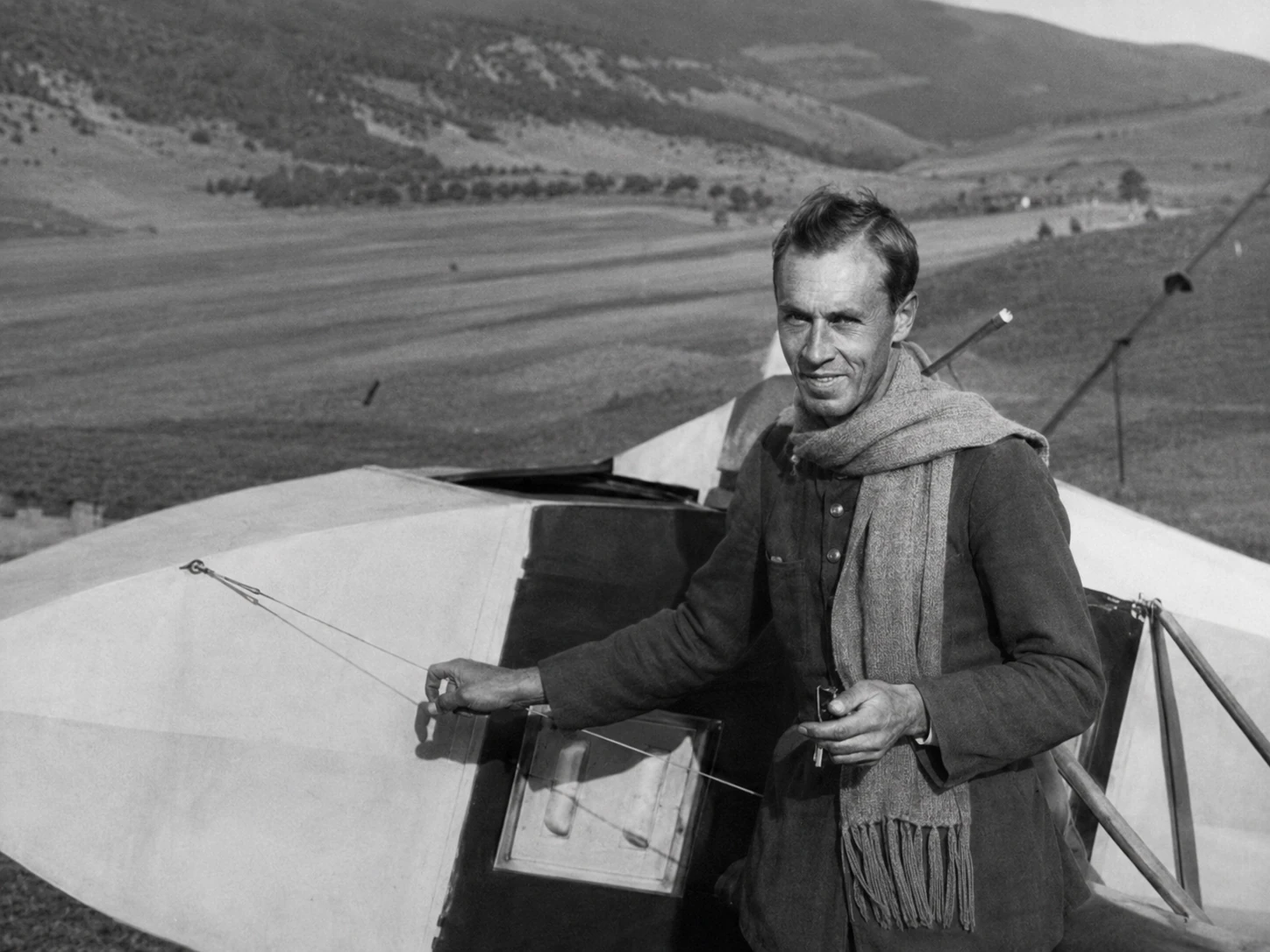
Staff capt. Nikolaj Šapošnikov
He was a Czechoslovak military aviation officer, military pilot and flying instructor.
Gliding
Šapošnikov belonged to the generation of Czechoslovak military pilots who also pursued gliding. During the 1920s his career was closely connected with Aviation Regiment 3 of General Aviator M. R. Štefánik and later with the Slovak Aeroclub of M. R. Štefánik at Vajnory.
He achieved a notable success at the Second National Gliding Competition at Medlánky in April 1925. Flying a Dewoitine glider as a second lieutenant, he covered 1,716 metres and set a new Czechoslovak distance record for unpowered flight.[1]
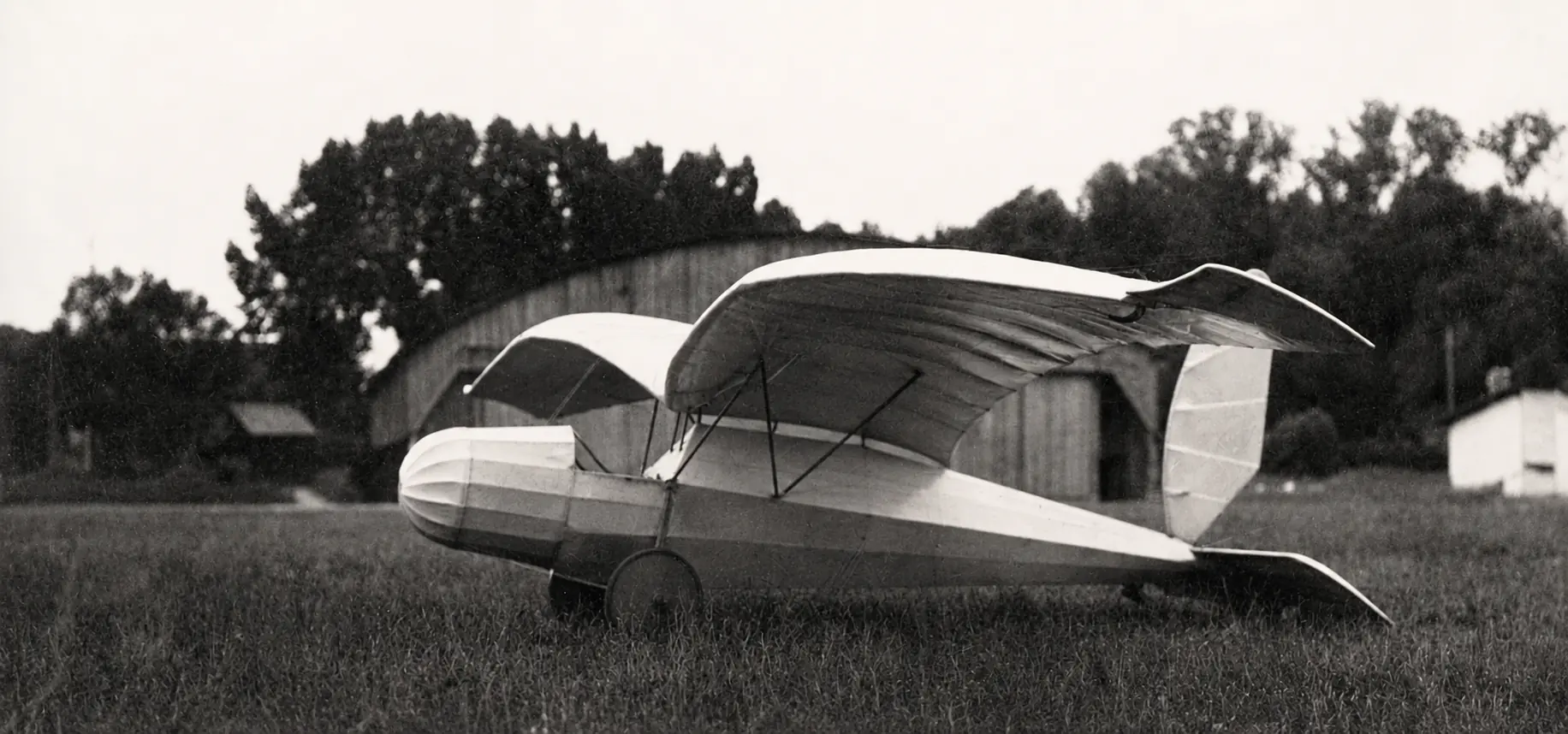
His name is also associated with the development of gliders and light powered aircraft built within Aviation Regiment 3 at Nitra. Alongside his military service, he worked on aircraft design and construction.
In 1923, the Ministry of National Defence purchased three Dewoitine aircraft in France: one powered D.7, serial number 3, with a three-cylinder Salmson 10 engine, and two unpowered P.3 aircraft.
Contemporary French sources described the Dewoitine D.7 as an “avionnette”, literally a small light aeroplane. Aircraft number 3 was assigned to Aviation Regiment 3 at Nitra on 22 November 1923. It was used as a motor glider and later in an unpowered configuration. From 1925 it carried the regiment’s emblem on its fuselage.
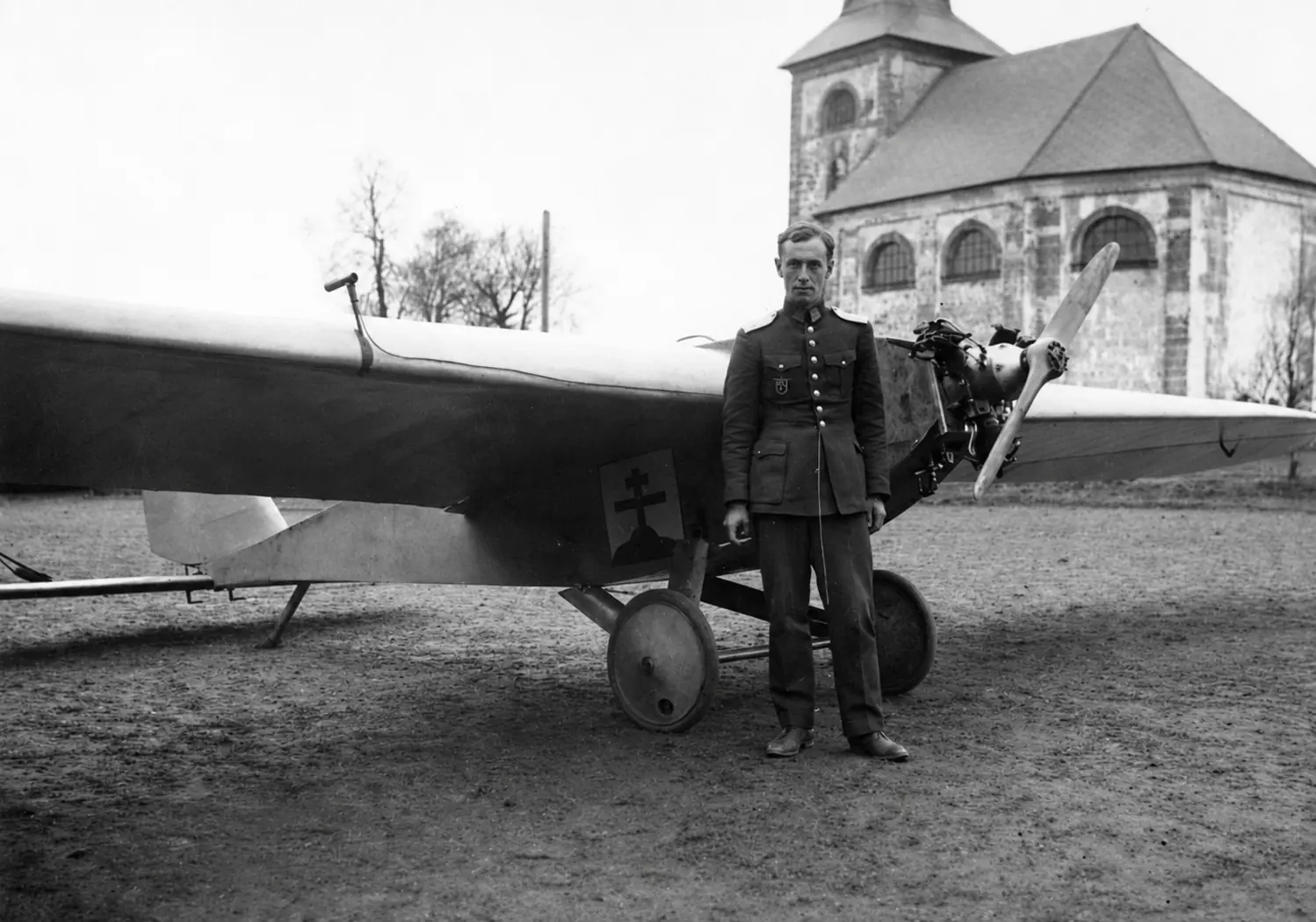
Nitra 1 – Nitra 3
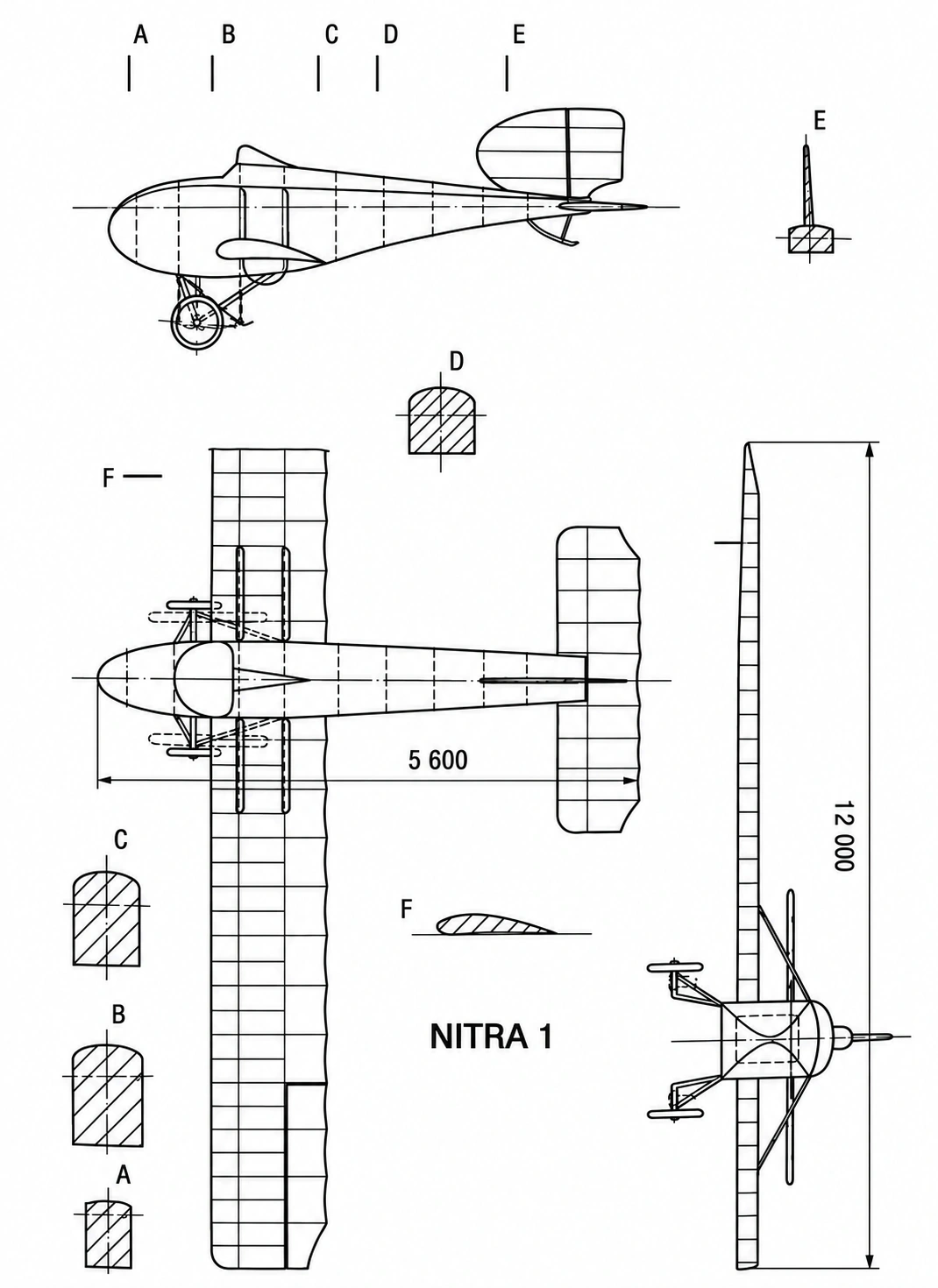
Nitra 1, built in 1923 in the repair workshops of Aviation Regiment 3 at Nitra, was designed by Staff capt. Koželuh. Šapošnikov flew it as a pilot, alternating with rtm. B. Kašpar at the national competitions of the period.
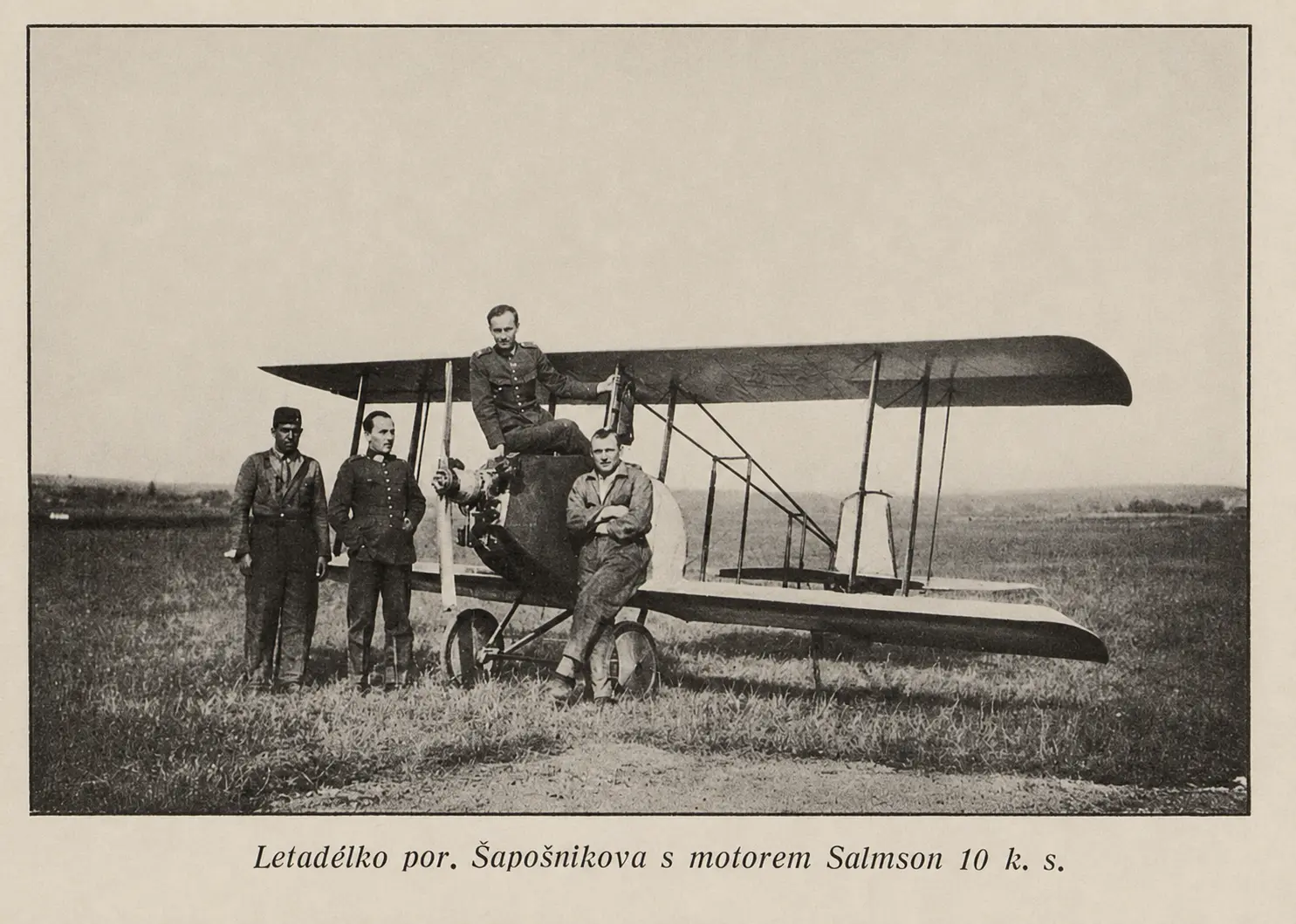
Nitra 2, built in 1924, was a powered version of Nitra 1 fitted with a Salmson 10 engine.
Vajnory and Aviation Regiment 3
Nikolaj was assigned to the 40th Fighter Squadron of Aviation Regiment 3, which was stationed at Vajnory from 1926.
On 15 March 1929 he was appointed temporary commander of the 40th Squadron. On 8 October 1929 he became commander of the same unit after it had been renumbered as the 38th Squadron.
Slovak Aeroclub of M. R. Štefánik
Nikolaj was chief pilot of the Slovak Aeroclub of M. R. Štefánik flying school.
Four of the first pupils completed the course successfully: Ľudmila Šapošniková, Vojtech Ihriský, capt. Vladimír Kočmerževský and rtm. Coufal.[2]
Šapošnikov thus formed an important link between Czechoslovak military aviation, Aviation Regiment 3 and the emerging world of sporting aviation at Vajnory.
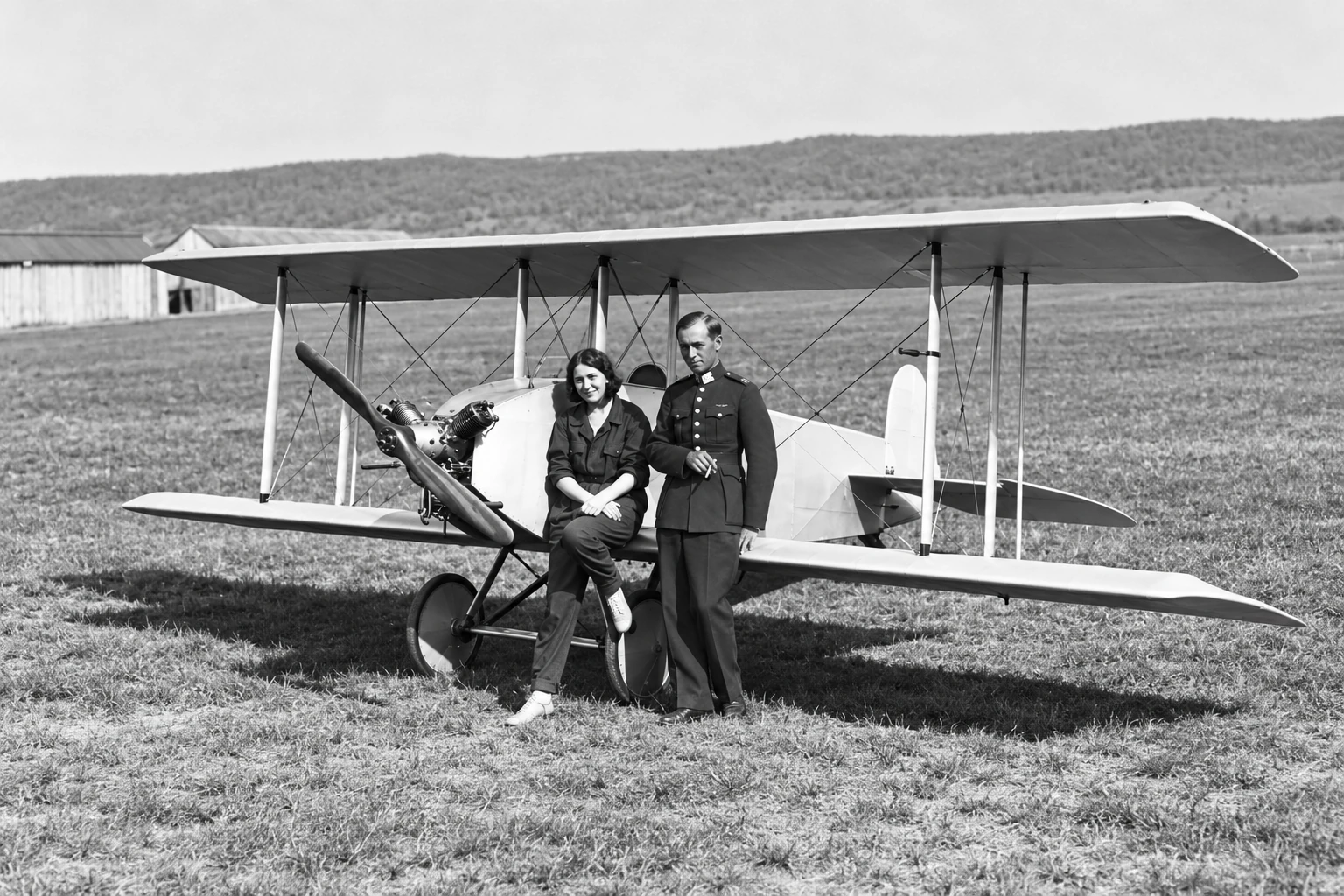
Vrabčiak
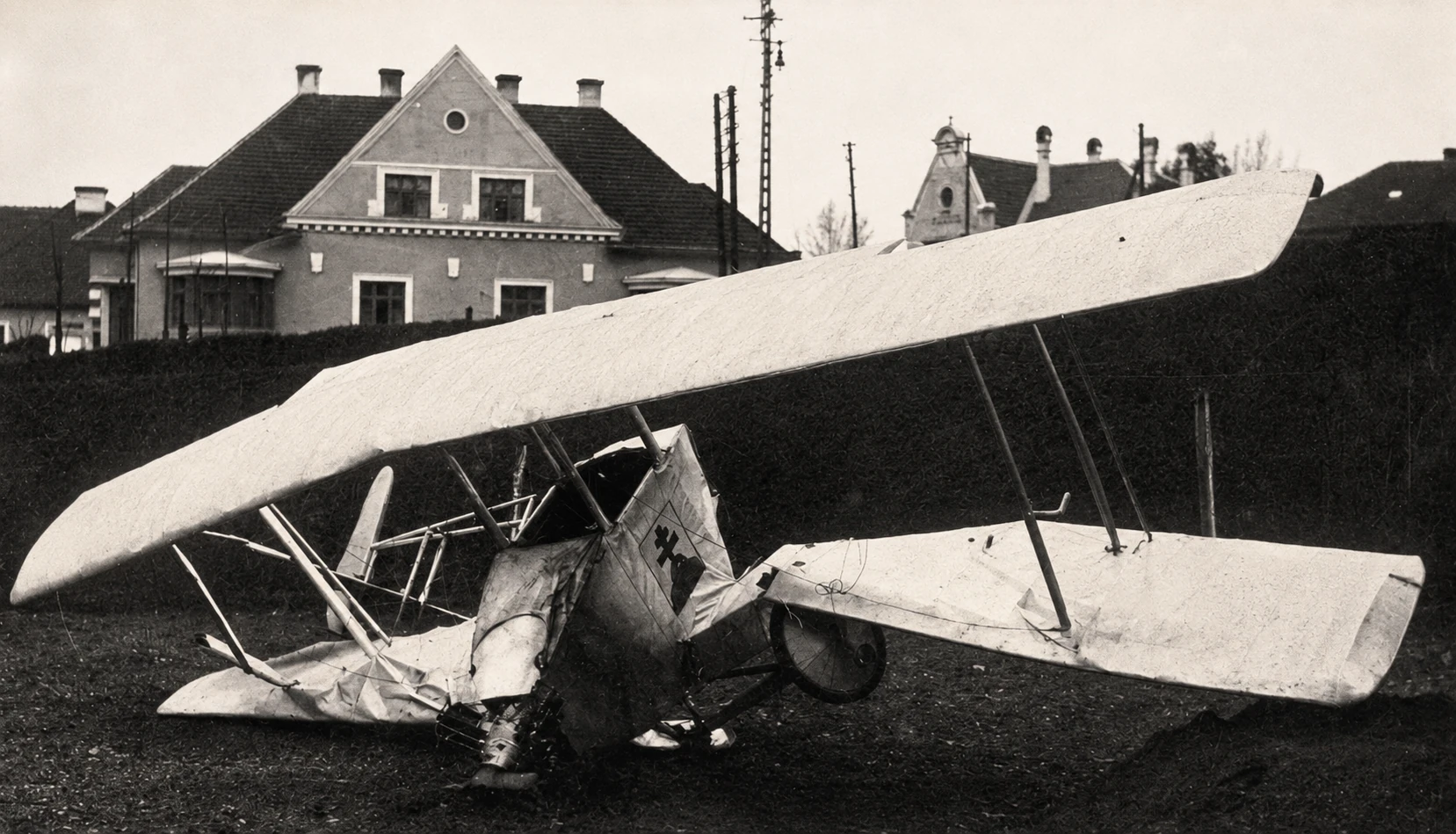
He built the small single-seat Vrabčiak biplane for his wife Ľudmila. He was already testing the aircraft in 1928 and on 18 October that year flew it on the route Nitra – Piešťany – Bratislava – Nitra.
It was a single-seat biplane with a wingspan of approximately 5.5 metres and a weight of about 150 kilograms, powered by a Salmson engine producing roughly 10 horsepower.
Surviving photographs show Vrabčiak in different structural forms, and an image of the crashed aircraft has also survived. Ľudmila Šapošniková later flew Vrabčiak as well, although the type does not appear in either of her two surviving pilot logbooks.
Olomouc and the 1938 mobilisation
In September 1933, Šapošnikov was transferred to Aviation Regiment 2 at Olomouc.
During the 1938 mobilisation he served as a staff captain in the aviation branch at Aviation Depot 2 in Olomouc. From 15 to 21 October 1938 he commanded the Auxiliary Squadron of Aviation Depot 2.[3]
Murder and the postwar investigation
According to the final investigation report of the Regional Criminal Office in Zlín dated 2 July 1947, staff captain Nikolaj Šapošnikov was murdered in early December 1944 while serving with the partisans. A group of partisans lured him into the Podseniska forest within the municipality of Liptál on the pretext of taking him to partisan headquarters, where he was shot from behind in the back of the head. His body was found on 21 December 1944. A subsequent forensic autopsy in Vsetín confirmed a gunshot wound to the head.
The perpetrators justified their actions by claiming that Šapošnikov was a traitor and that headquarters of the First Jan Žižka of Trocnov Partisan Brigade had ordered his execution. The postwar investigation, however, reached the opposite conclusion. No such order had been issued, and claims that Šapošnikov had collaborated with the Gestapo or informed on partisans could not be substantiated.
The investigation instead established that Šapošnikov was a duly registered member of the partisan movement and had taken part in combat. Subsequent checks at Gestapo offices produced no evidence of collaboration with the Germans. According to testimony from a representative of brigade headquarters, the Gestapo had in fact been searching for Šapošnikov because he had joined the partisans and participated in their activities.
The investigation also considered a possible motive: Šapošnikov had alerted brigade leaders to abuses of partisan activity by some members, particularly theft and personal enrichment. According to the final report, rumours of his alleged betrayal may therefore have been deliberately spread to eliminate a man who was reporting these practices to headquarters.[5]
Sources
[1] Encyclopaedia of the History of Brno: Second National Gliding Competition near Brno, 4–19 April 1925. Record of Šapošnikov’s Czechoslovak distance record of 1,716 m in a Dewoitine glider.
[2] Letectví, Vol. XI, No. 2, February 1931, p. 61: Annual report of the Slovak Aeroclub of M. R. Štefánik. Contemporary primary source for SAK training, capt. Šapošnikov’s role and the first graduates.
[3] Jiří Fidler: Na zrazeném nebi, Prague 2015. Online database record: Auxiliary Squadron of Aviation Depot 2 (1938–1938).
[4] Pavel Šrámek: “Ztráty velitelského sboru čsl. branné moci v letech 1939 až 1945”, in Milan Vyhlídal – Aleš Binar et al., Ozbrojené síly a čsl. stát IV, University of Defence, Brno 2024.
[5] Regional Criminal Office in Zlín: final investigation report on the murder of Nikolaj Šapošnikov, 2 July 1947.