
Published in February 1931, the report reviews SAK Bratislava’s activities during 1930.
Who’s who in the report
Aeroclub leadership
- JUDr. Pavel Fábry
- chairman
- Staff Capt. Ilja Svoboda
- first deputy chairman
- manufacturer Lippert
- second deputy chairman
- Vojtech Ihriský
- first secretary; one of the club’s first four pilots
- Capt. Kočmerževský
- second secretary; one of the club’s first four pilots
- O. Turnovský
- treasurer
Committee and reserve members
- E. Liška
- outgoing first secretary; committee member
- 1st Lt. Polma
- committee member; presented the technical committee’s report
- JUDr. Pavlů and Dr Semian
- committee members
- Maj. Tollár, Capt. Zitta and Ing. Bartošek
- reserve committee members
Auditors
- Mrs Šapošniková
- auditor; Slovakia’s first woman pilot
- Ing. Kňazovič
- auditor
- Ing. Merhaut
- reserve auditor
Training and flying
- Capt. Šapošnikov
- led pilot training
- pilots Koch and Šubrt
- flight teachers and instructors
- Warrant Officer Coufal
- one of the first four pilots; observer on the winning flight to Brno
- Col. Sazima
- commander of Air Regiment 3; presented badges to Aeroclub-trained pilots
Full report
The general assembly of SAK Bratislava took place on 2 February 1931 with a large attendance. Club chairman JUDr. Pavel Fábry opened the meeting and asked those present to stand in memory of the club’s unexpectedly deceased vice-chairman and co-founder, JUDr. Gustáv Hubáček.
The meeting also honoured those who had lost their lives in aviation during the previous year. Fábry then stressed the importance of developing civil sport aviation in Slovakia, beyond its publicity value. The astonishing pace and expansion of aviation in neighbouring countries, and their exceptionally generous state budgets compared with our own grudging economies, were a painful warning.
In France, for example, substantial assistance enables even individuals to buy aircraft, and owners receive subsidies towards operating costs. Our clubs cannot yet contemplate buying modern new aircraft from their modest resources. We remain dependent on the goodwill of the military administration, which sells retired aircraft cheaply to clubs.
Our aircraft factories have yet to make a gesture of patronage, although they should remember that Aeroclubs train their future customers. A sound commercial approach would let clubs obtain at least one decent aircraft at an affordable price. Any small loss would eventually be recovered, if only because clubs could enter sporting events more readily and advertise the generous manufacturer.
Club secretary Mr E. Liška presented the activity report for 1930. He described an active year full of energetic, selfless work. Grants from the Ministries of National Defence and Public Works had enabled more promotional activity. Fuel for the retired military aircraft bought by the club takes a large share of the budget, so a fund was established to buy a new sport aircraft. Chairman Fábry’s generous donation gave it a solid foundation. Aircraft accommodation remains a problem: the club is still a “tenant”.
Thanks to the Ministry of Public Works, the aircraft spend winter in the Czechoslovak State Airlines hangar. With the club fleet expanding, this small hangar will no longer suffice, particularly as the airline is also expanding. The club must therefore consider building its own hangar. Lacking funds, it obtained permission from the Provincial Office to hold a public collection for construction.
The collection is under way, but the economic crisis and the public’s lack of knowledge and peculiar views about aviation mean it will probably not achieve the desired result. Much promotional work remains. Responsible officials should recognise this, particularly the daily press, which with few exceptions readily reports on Australian aviation but happily prints news of our own only when there is a crash. Reports of our aviation successes are pushed into a newspaper corner or the wastepaper basket. Honour to the exceptions: some Slovak newspapers are exceptionally helpful to the club.
The club was extremely active in sport and publicity. A successful event took place on 27 April 1930: together with the Slovak Motorists’ Club, it organised a distance race for free balloons, pursued by cars. Five domestic and foreign balloons competed. The Aeroclub donated an attractive prize for second place.
A two-person delegation and one club aircraft, crewed by pilot Šubrt and observer Coufal, attended the Moravian Aeroclub’s air day in Brno on 24–25 May. The aircraft won first prize in the rally flight.
The club achieved outstanding success in training pupils during the year. Despite inadequate equipment — two trainers — it trained six pupils, four of whom passed their theoretical and practical examinations.
The club’s first qualified pilots were therefore Mrs Šapošniková, Slovakia’s first woman pilot; Capt. Kočmerževský; sculptor Vojtech Ihriský; and Warrant Officer Coufal. Two more pupils are already flying solo and will take their examinations early this year.
Capt. Šapošnikov led the training, overcoming many difficulties through his tireless enthusiasm for aviation. Expert supervision and maintenance allowed the old aircraft to withstand the demands of training. Aviation was also promoted through air days for journalists, enabling each to write from personal experience.
18 October 1930 was a successful day: the presentation of badges to club-trained pilots was celebrated with many dignitaries and journalists present. Honorary club member Colonel Sazima, commander of Air Regiment 3, presented the badges. Chairman Fábry gave the pilots valuable gifts. A very interesting film, approximately 500 metres long, was made and will be lent to Aeroclubs and other interested parties on request.
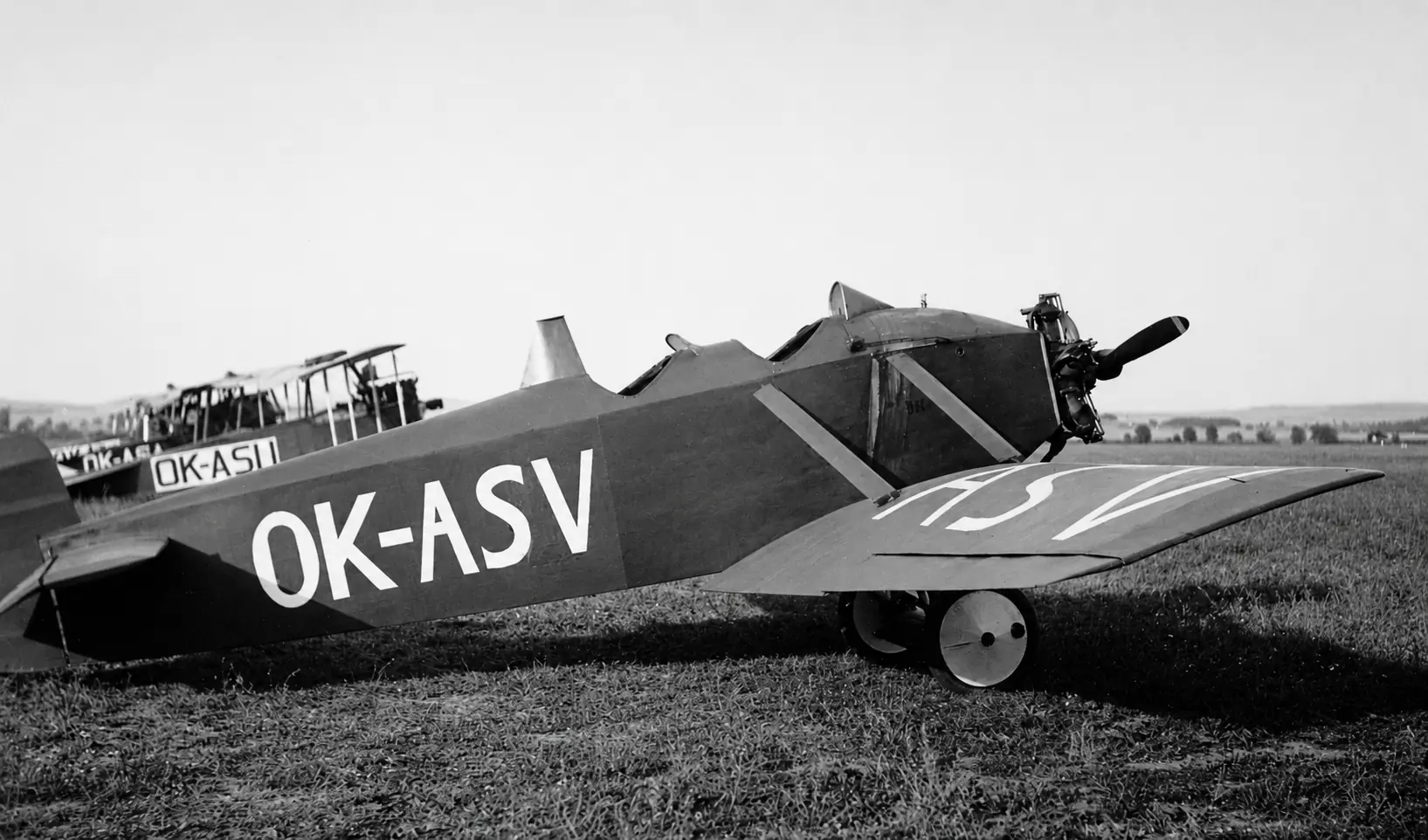
Given the amount of equipment, technical work was overseen by a technical committee. In Capt. Šapošnikov’s absence, First Lieutenant Polma presented its report. The club currently has three airworthy aircraft: Š.10.36, A.1.4 and A.12.24.
During the year, 1.453 flights were made, including 1.179 training flights and 274 cross-country, test and promotional flights. Total flying time was 159 hours 53 minutes. Petrol consumption was 3.626 kg and oil consumption 406 kg. Two forced landings occurred, both smooth and without an accident (Šapošniková and Ihriský).
The technical committee’s brief but eloquent report was warmly received. The treasurer’s report was also welcome, as the balance sheet showed a surplus.
The outgoing committee was formally discharged.
The elections were unanimous: Pavel Fábry as chairman; Staff Capt. Ilja Svoboda as first deputy; manufacturer Lippert as second deputy; Vojtech Ihriský as first secretary, E. Liška having resigned because of other commitments; Capt. Kočmerževský as second secretary; and O. Turnovský as treasurer.
Committee members were E. Liška, First Lieutenant Polma, JUDr. Pavlů and Dr Semian, with Maj. Tollár, Capt. Zitta and Ing. Bartošek as reserves. Auditors were Mrs Šapošniková and Ing. Kňazovič, with Ing. Merhaut as reserve.
Formal thanks were recorded to the outgoing secretary for his dedicated and effective work. Capt. Šapošnikov was likewise thanked for his tireless training of pupil pilots, effectively assisted by pilots Koch and Šubrt.
The new committee began work immediately, setting out to increase activity within available means and promote aviation. Inform the uninformed. There is much work in Slovakia. An entire generation that does not yet understand what an aircraft is must be educated. We therefore ask those best placed to help for their understanding.
This is an English translation of a period article transcribed into modern Slovak.
Source: Letectví, volume XI, issue 2, February 1931, pp. 61–62. kramerius.nm.cz