
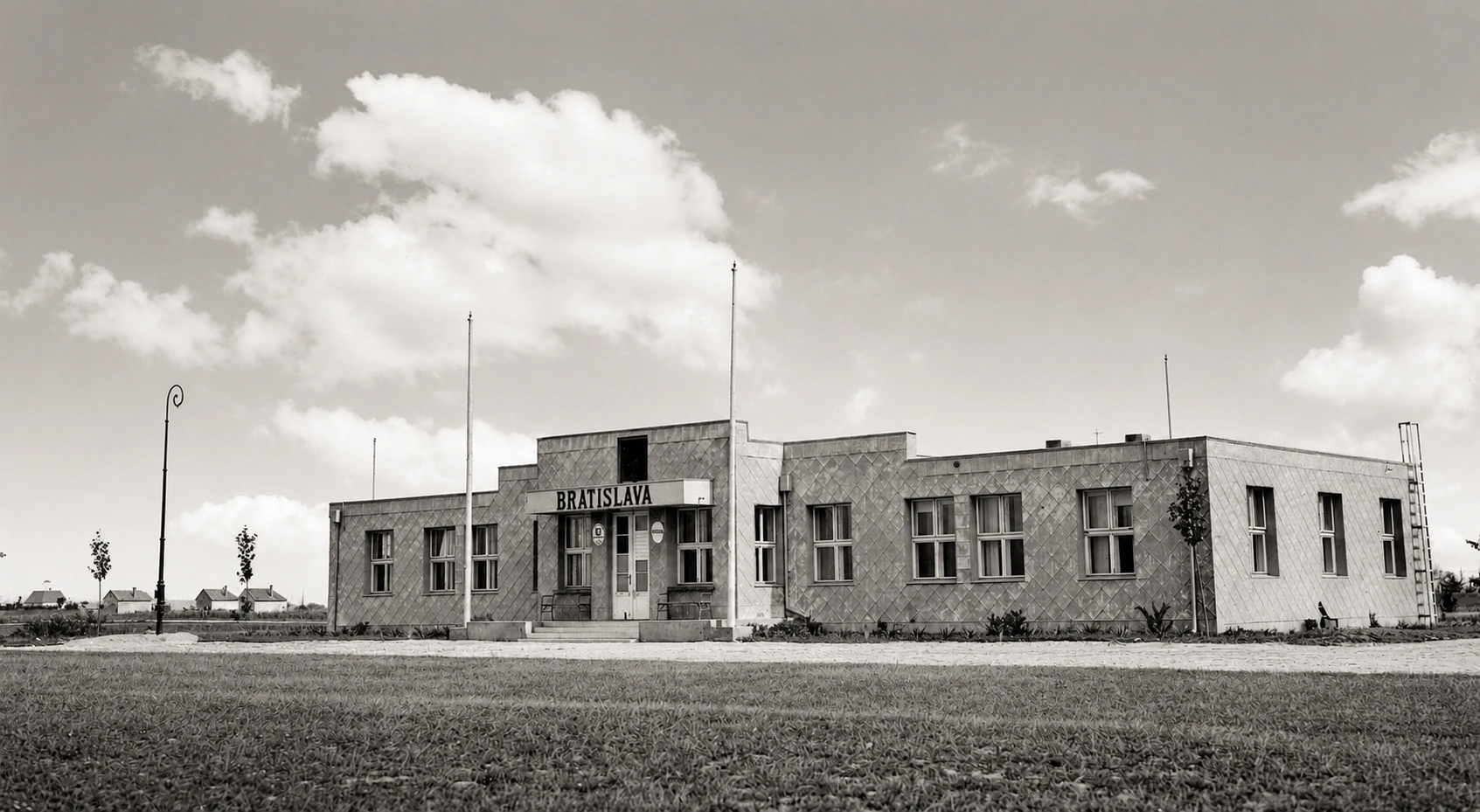
Published in April 1935, the report covers the eighth ordinary general assembly of the M. R. Štefánik Slovak Aeroclub in Bratislava.
Who’s who in the report
Aeroclub leadership
- JUDr. Pavel Fábry
- chairman; represented at the meeting by the second vice-chairman
- General Miloš Žák
- first vice-chairman
- JUDr. Karol Pavlů
- second vice-chairman; chaired the election of the new committee
- Jozef Merhaut
- treasurer
- Imrich Kubiš
- secretary
- Dr. Viktor Bečka
- deputy secretary
- Dr. Eduard Jarkovský
- fleet manager
Honorary presidency and committee
- Jozef Országh
- honorary chairman
- Army General Jozef Šnejdárek
- deputy honorary chairman
- Dr. Vladimír Krno
- deputy honorary chairman; city mayor
- Col. Jaroslav Skála, Col. Studený, Ján Pálfy and Dr Ing. Zátko
- honorary committee members
Guests and represented authorities
- Dr. Juraj Slávik
- Member of Parliament
- General Žák
- Ministry of National Defence representative
- Maj. Mihulec
- Ministry of Public Works representative
- Ing. Weysser
- MLL technical commissioner
- Staff Capt. Sladký
- general assembly guest
Ceremonial eighth ordinary general assembly
A ceremonial general assembly. On Monday 1 April at 7 p.m., the spacious rooms of the Slovak Motorists’ Club in the Agricultural Museum filled up. Members of Slovakia’s sole aviation organisation met officials, association representatives and guests at the eighth ordinary general assembly of the M. R. Štefánik Slovak Aeroclub. They discussed serious organisational questions and current affairs, as demanded by the gravity of the times and national defence.
Those present included MP Dr Juraj Slávik, General Žák for the Ministry of National Defence, aviation major Mihulec for the Ministry of Public Works, technical commissioner Ing. Weysser for MLL, Staff Captain Sladký and supporters from various organisations. The absent chairman, Bratislava lawyer JUDr. Pavel Fábry, away on business in Paris, was represented by vice-chairman JUDr. Karol Pavlů.
Almost everyone agreed on the gravity of the international situation. Czechoslovak, and specifically Slovak, civil aviation needed the closest cooperation with the wider Slovak public. Aviation, then considered the most effective means of defending a free state, required every support. The army could not do everything; it already had so many duties that it had to stretch all its resources simply to fulfil the essential programme.
Civil aviation offered the Czechoslovak army cooperation in defence preparedness. It sought aircraft and capable people so everything would be ready if needed. Slovak civil aviation was organised exclusively as a sport and had helped lay the foundations of our aviation. It could not stand idly by while foreign countries made extraordinary efforts to build aircraft fleets, until recently under the guise of developing civil sport or commercial aviation.
The M. R. Štefánik Slovak Aeroclub retained its existing character. It nevertheless asked its members and the Slovak public to support all planned activities aimed at expanding its fleet and training capable young pilots.
The club’s programme was extensive. Its next undertaking was the Štefánik Memorial, a symbolic tribute to the great national hero and first Slovak aviator. An exciting race was planned on the Bratislava–Štefánik memorial on Bradlo–Piešťany–Bratislava route, on a fine June morning, followed by the familiar afternoon air day. Aviators and organisations from all Little Entente countries were invited, giving it an international character. The army also promised active participation.
Vajnory airfield was expected to come alive with the engines of training aircraft flown by young aviation pupils. Promoting powered flying in Slovakia would be entrusted to a special committee led by editor Vlašák.
A new committee was elected under vice-chairman Karol Pavlů, an active Bratislava lawyer and pilot. Provincial President Jozef Országh headed the honorary presidency, assisted by Army General Jozef Šnejdárek and Mayor Dr Vladimír Krno. The honorary committee comprised Colonel Jaroslav Skála, Colonel Studený, Ján Pálfy and Dr Ing. Zátko.
The executive committee consisted of Pavel Fábry, chairman; General Miloš Žák, first vice-chairman; Karol Pavlů, second vice-chairman; director Jozef Merhaut, treasurer; manager Imrich Kubiš, secretary; Dr Viktor Bečka, deputy secretary; and Dr Eduard Jarkovský, fleet manager. A larger committee was also elected, its members sharing further duties. — gvk.
This is an English translation of a period article transcribed into modern Slovak.
Source: Letectví, April 1935, pp. 148 and 150.