Horné Orešany soaring site
author: Simeon Hodulík
source - Letecké noviny
Several glider pilots from Bohemia and Moravia have asked me to write something about the Horné Orešany soaring site for their information. To meet these requests, I have decided to write a short article. I would be pleased if comrades from Bohemia and Moravia would also write assessments of their sites for Letecké noviny, which could only benefit the entire gliding community.
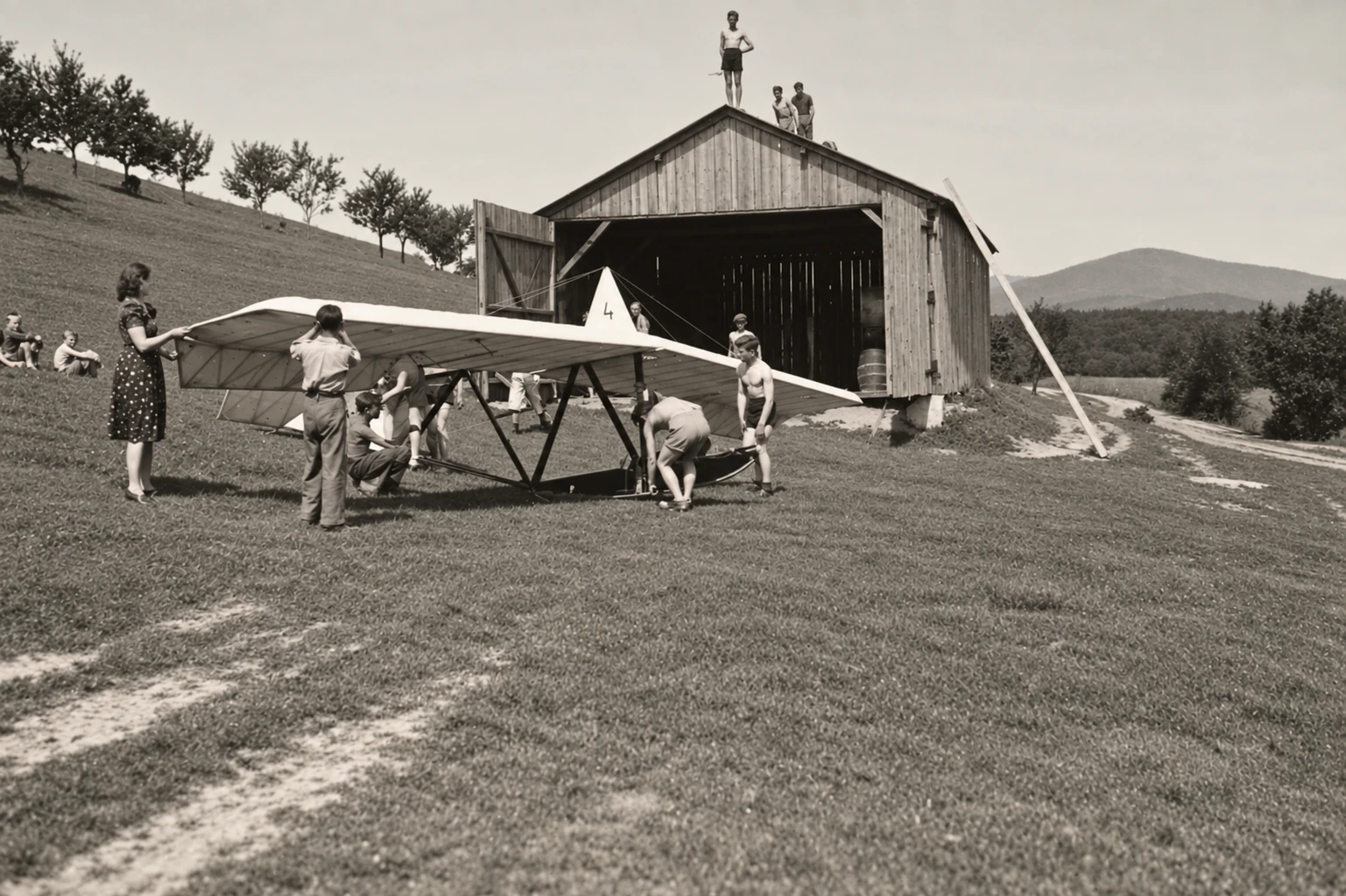
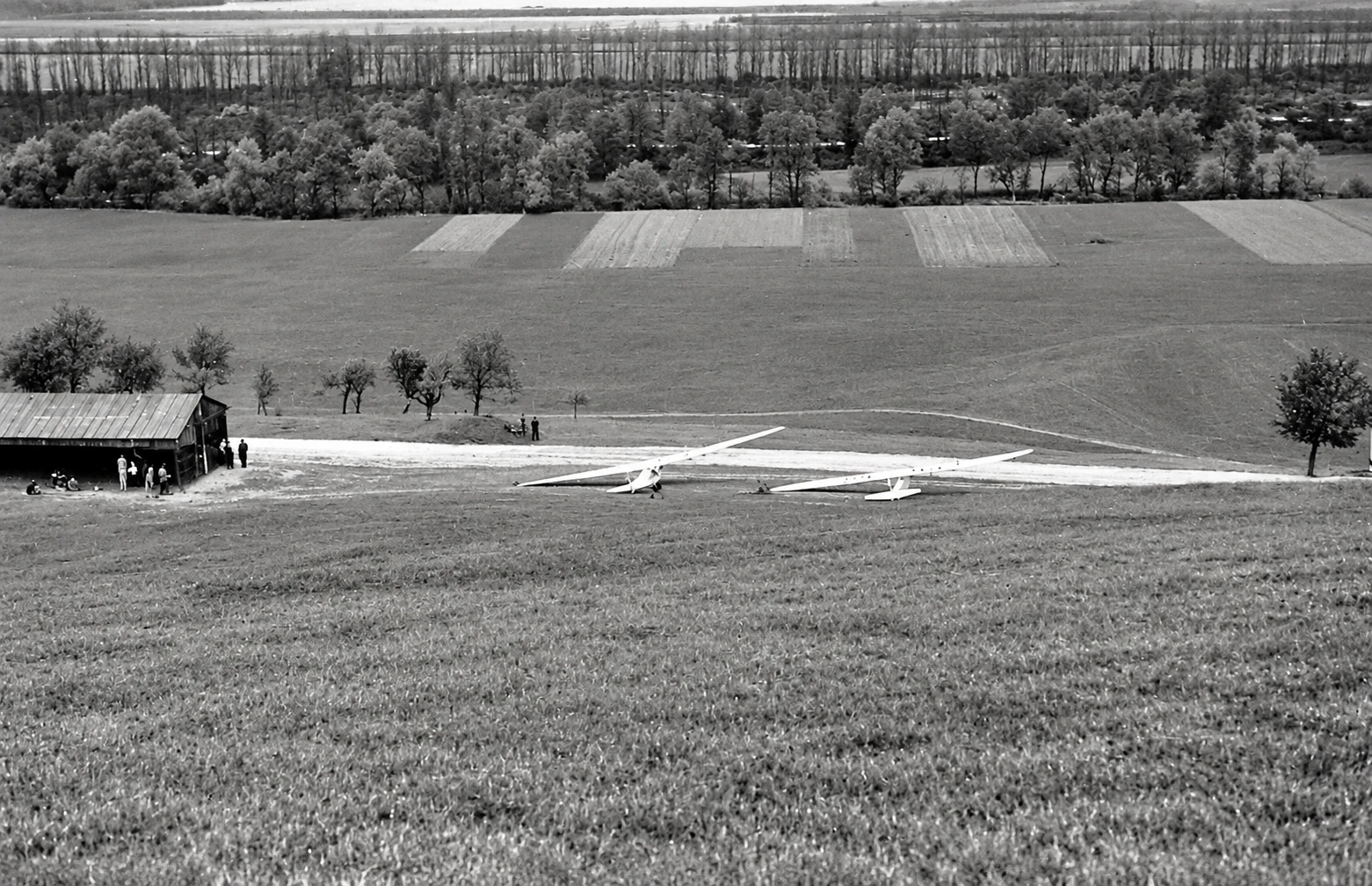
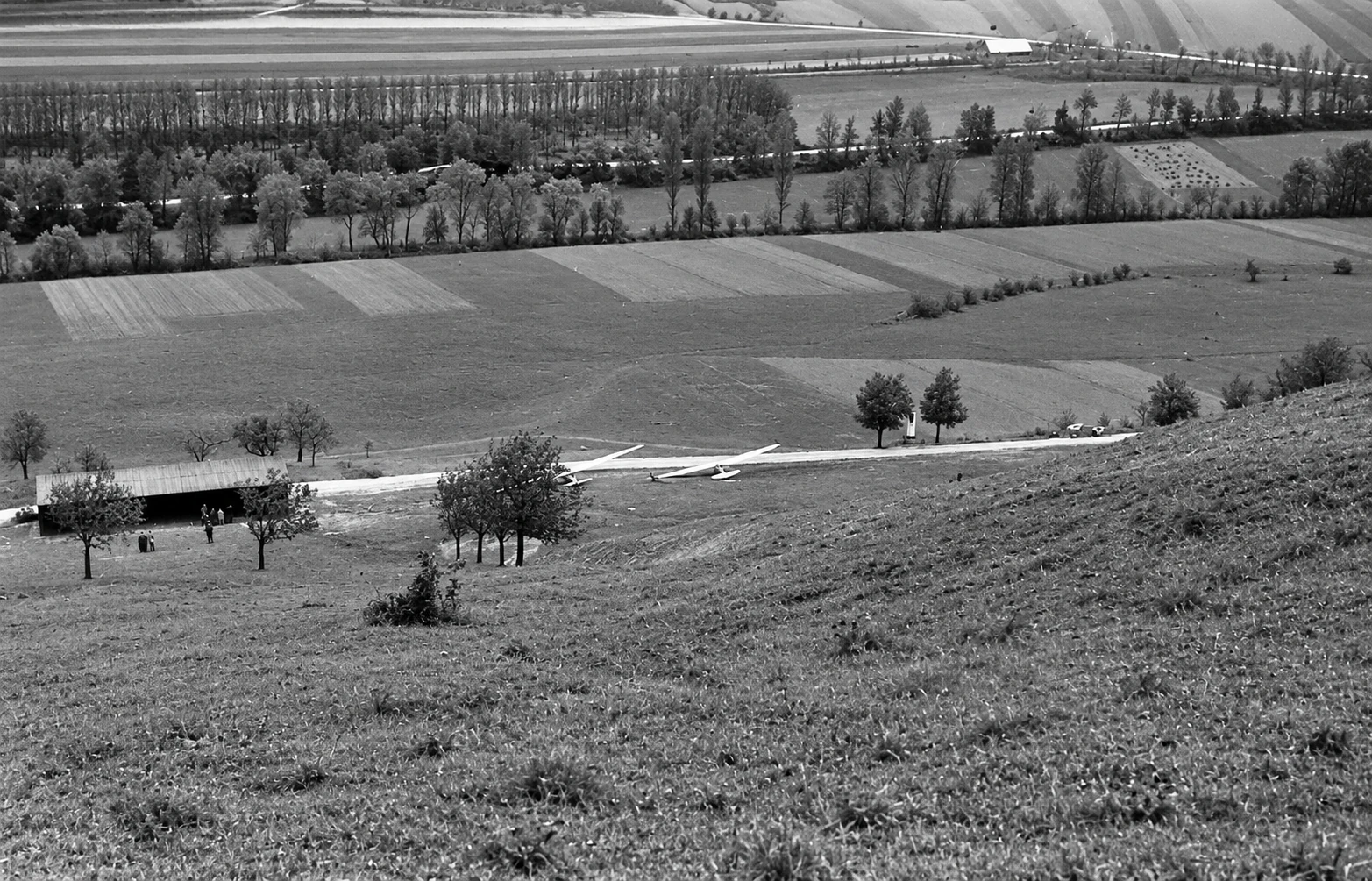
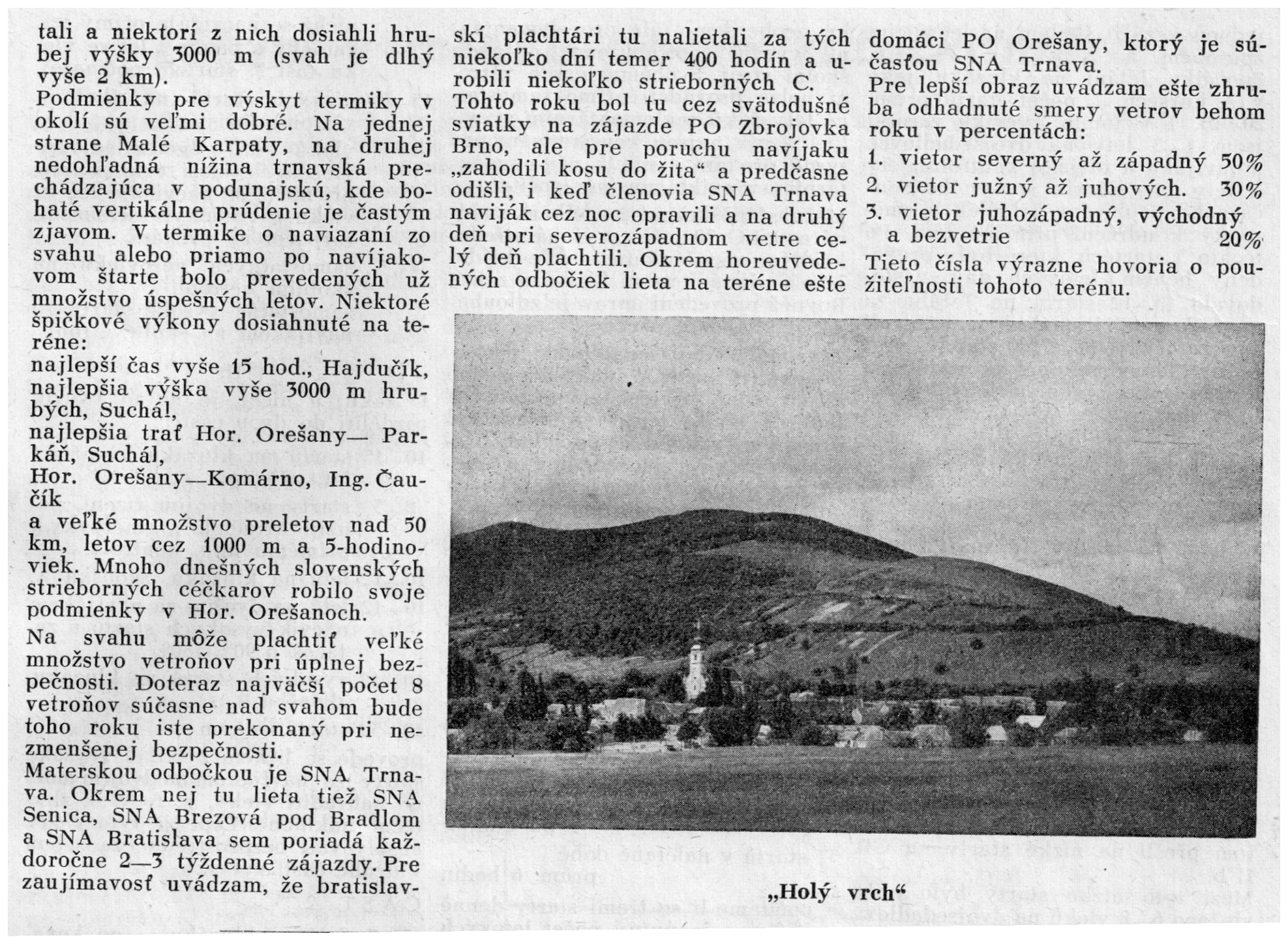
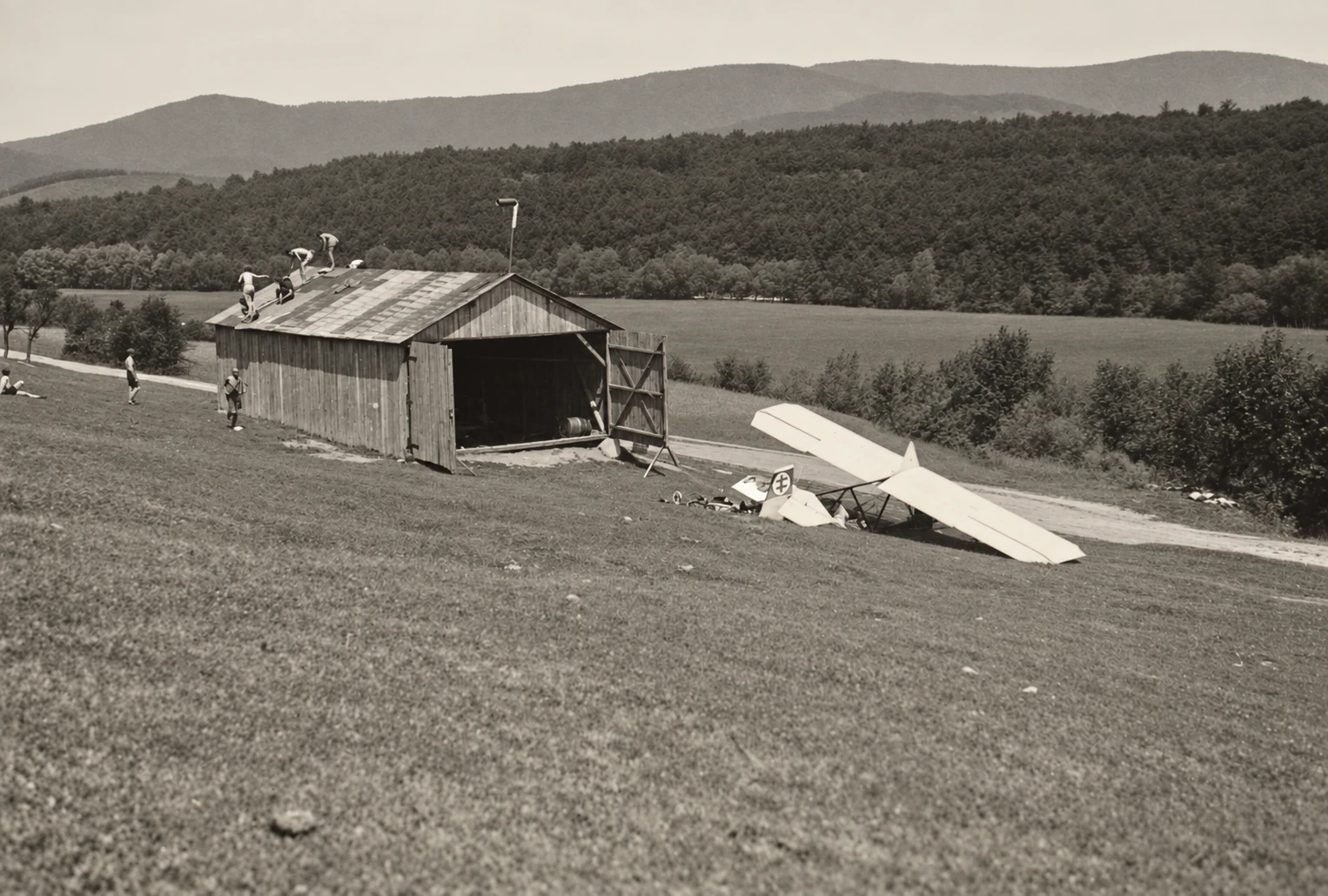
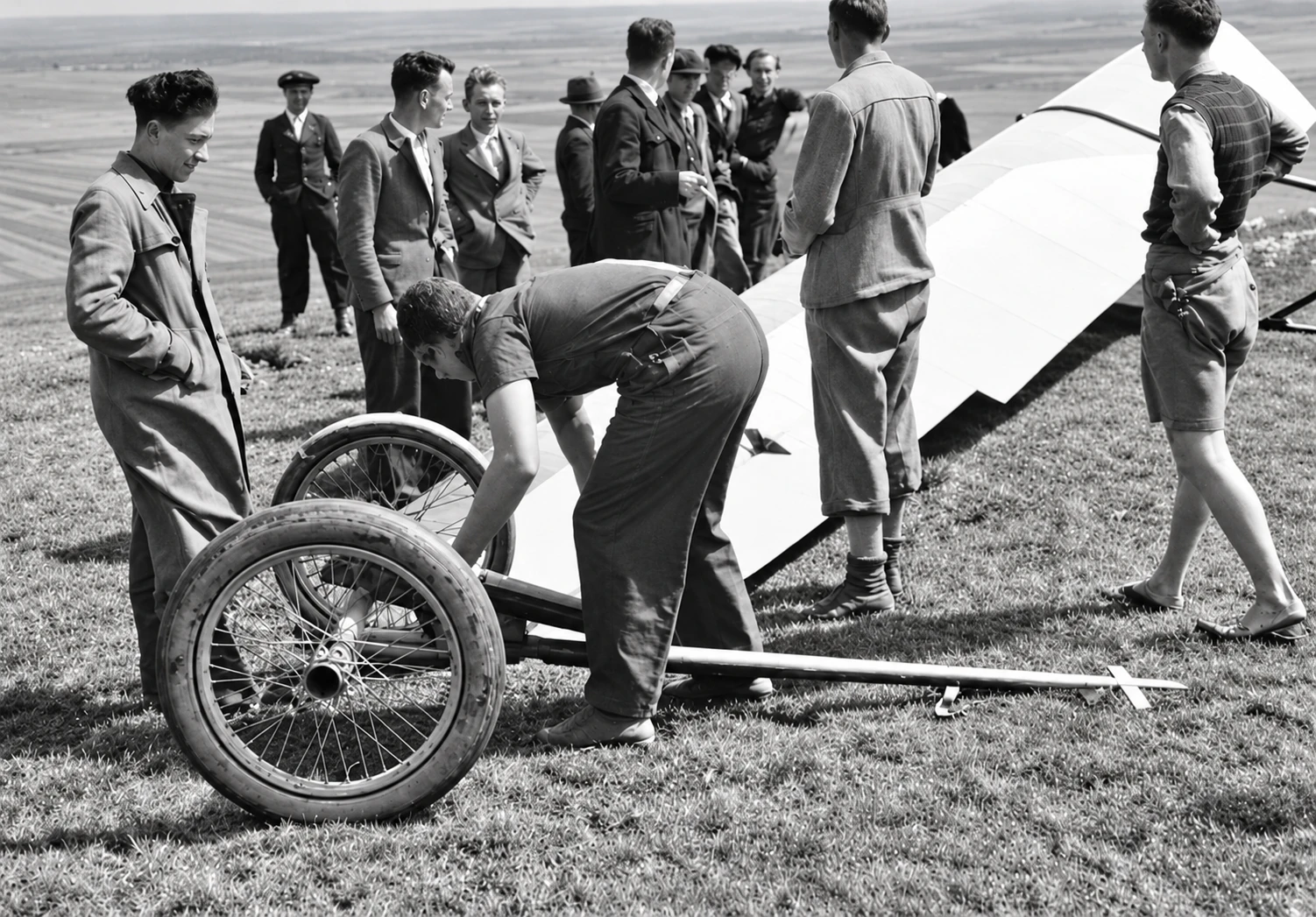
The Horné Orešany soaring site is located about 15 km northwest of Trnava. It consists of a spur of the Little Carpathians, 2–4 km long. Ridge soaring is possible on two slopes of this spur: one in southerly to easterly winds, the other in northerly to northwesterly winds. The ridge runs roughly from southwest to northeast and ends at Holý vrch, 370 m above sea level, a beautifully conical, grass-covered hill from which bungee launches for ridge soaring were made in the ‘Stone Age of gliding’ (see photograph). Its northeastern side is steeper and drops abruptly onto a level strip 200–250 m wide and about 1,300 m long, beyond which gently rolling ground rises by about 30 m.
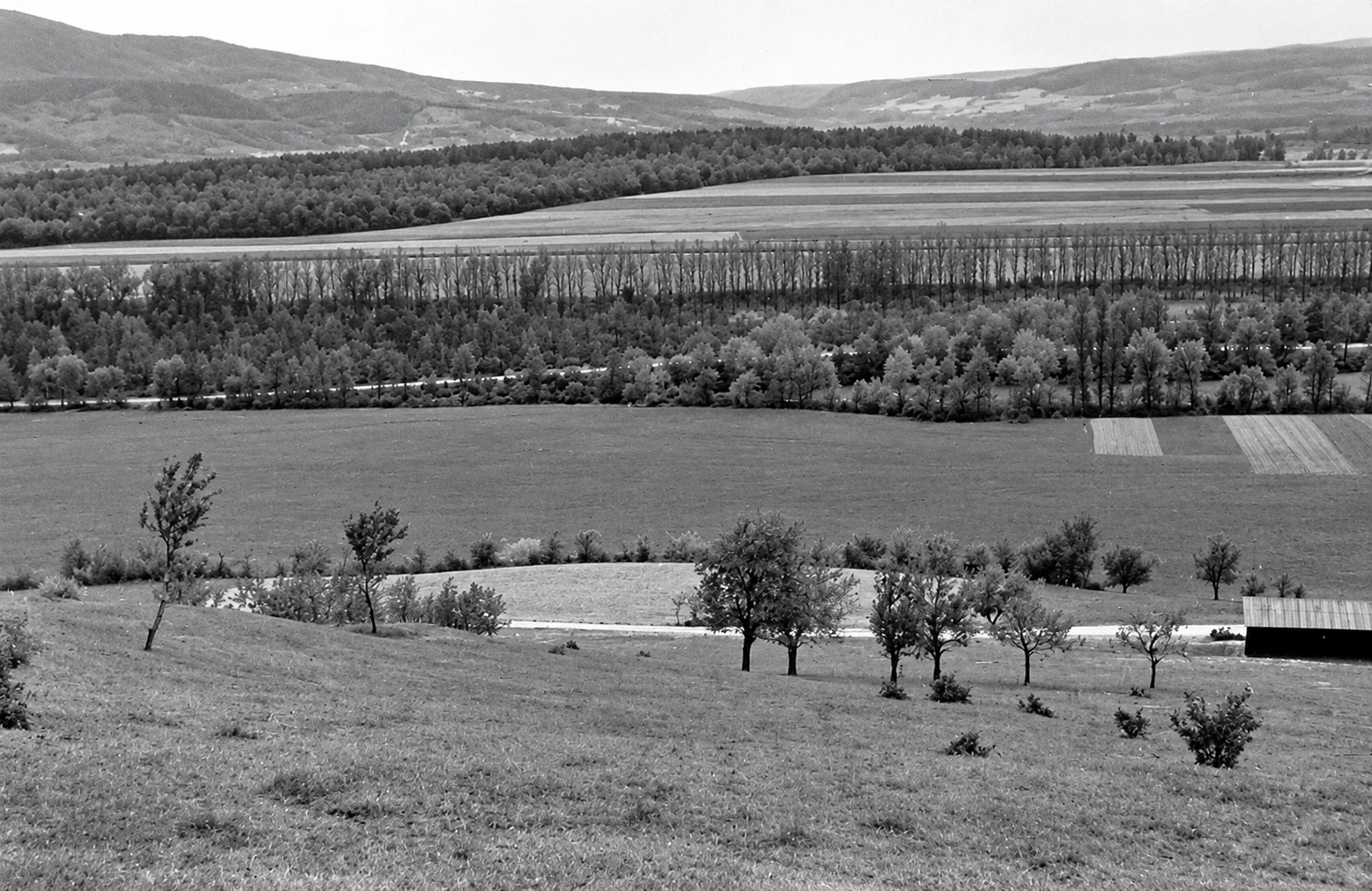
All customary methods of launching, including aerotows, can be carried out safely from the level strip. Launches are possible in winds from both easterly and westerly directions. This is particularly important for winch launching. The height needed to establish oneself in lift after a winch launch is 150 m on the northwestern slope and 100 m more on the southwestern slope.
On the southeastern slope, soaring is possible in winds of only 3–4 m/s. The slope is steep, covered with deciduous trees about 20 years old and, lower down, dotted with vineyards producing the excellent and renowned Orešany wine (available to glider pilots only after flying, of course — typesetter’s note).
This slope, with no obstacles relative to the landing area, rises 300–350 m above it. It is 4 km long, and soaring along it is a real pleasure.
The northwestern slope is almost a copy of the southeastern one, except that it requires a somewhat stronger wind: 6–7 m/s. Its great advantage is that it lies immediately above the landing area, making it entirely reliable to establish oneself in lift after a winch launch.
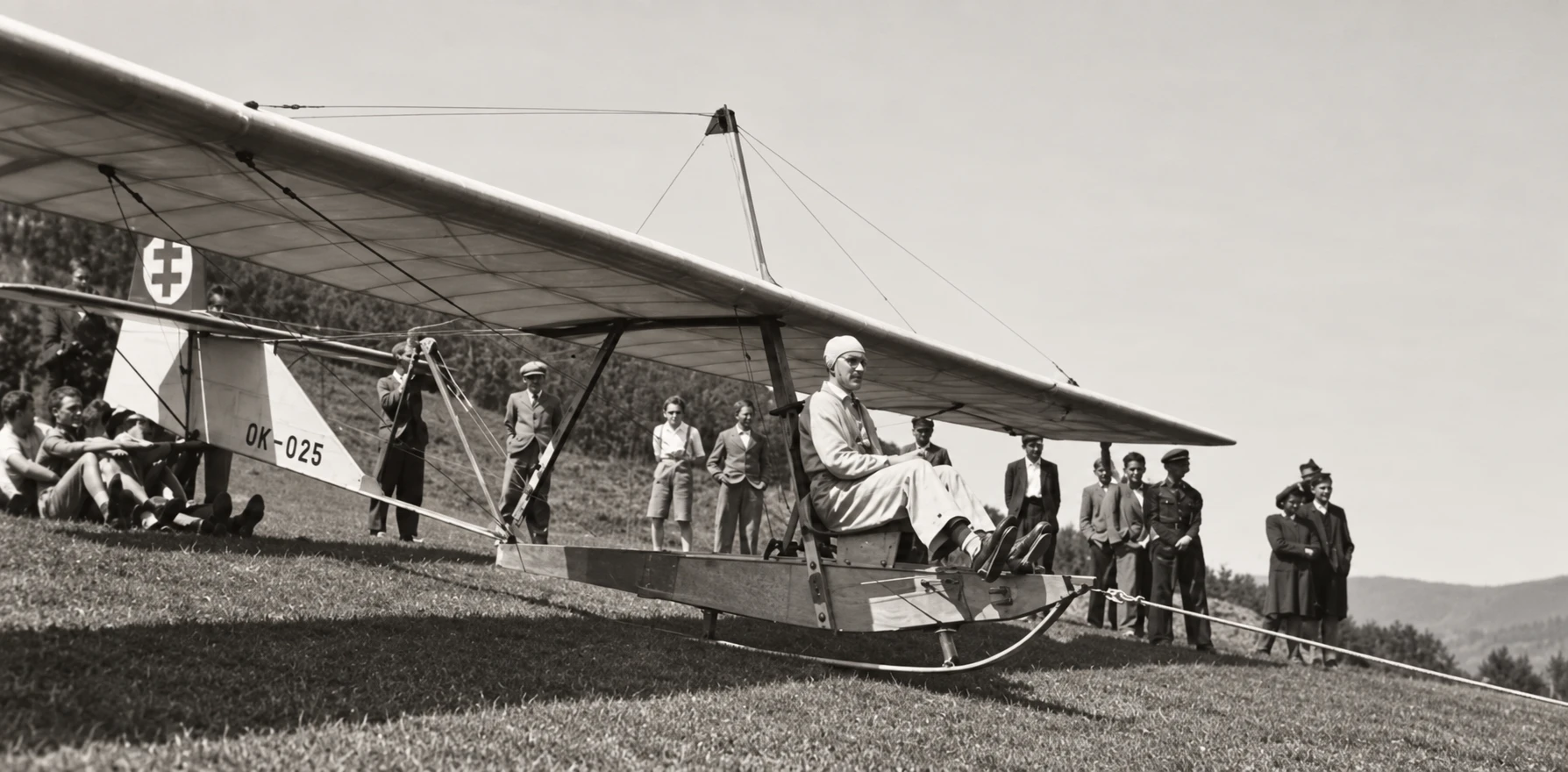
In stronger northwesterly winds, it is possible to soar in mountain wave, which appears to occur here very frequently. Wave has so far been observed on the lee side of hills about 3 km ahead of the Horné Orešany site, and it can be contacted about 500 m before the slope of the site itself.
The easiest way to enter the wave is from normal ridge soaring at 700–800 m above the landing area, a normal, ‘everyday’ height gain.
Some members of PO SNA Bratislava could tell us more about this. During a visit to Orešany in 1949, they flew here in wave, and some reached a gross height of 3,000 m (the slope is more than 2 km long).
Conditions for thermal activity in the surrounding area are very good. On one side are the Little Carpathians; on the other, the vast Trnava plain extending into the Danubian plain, where strong vertical air movement is common. Many successful thermal flights have already been made after connecting from ridge lift or directly after a winch launch.
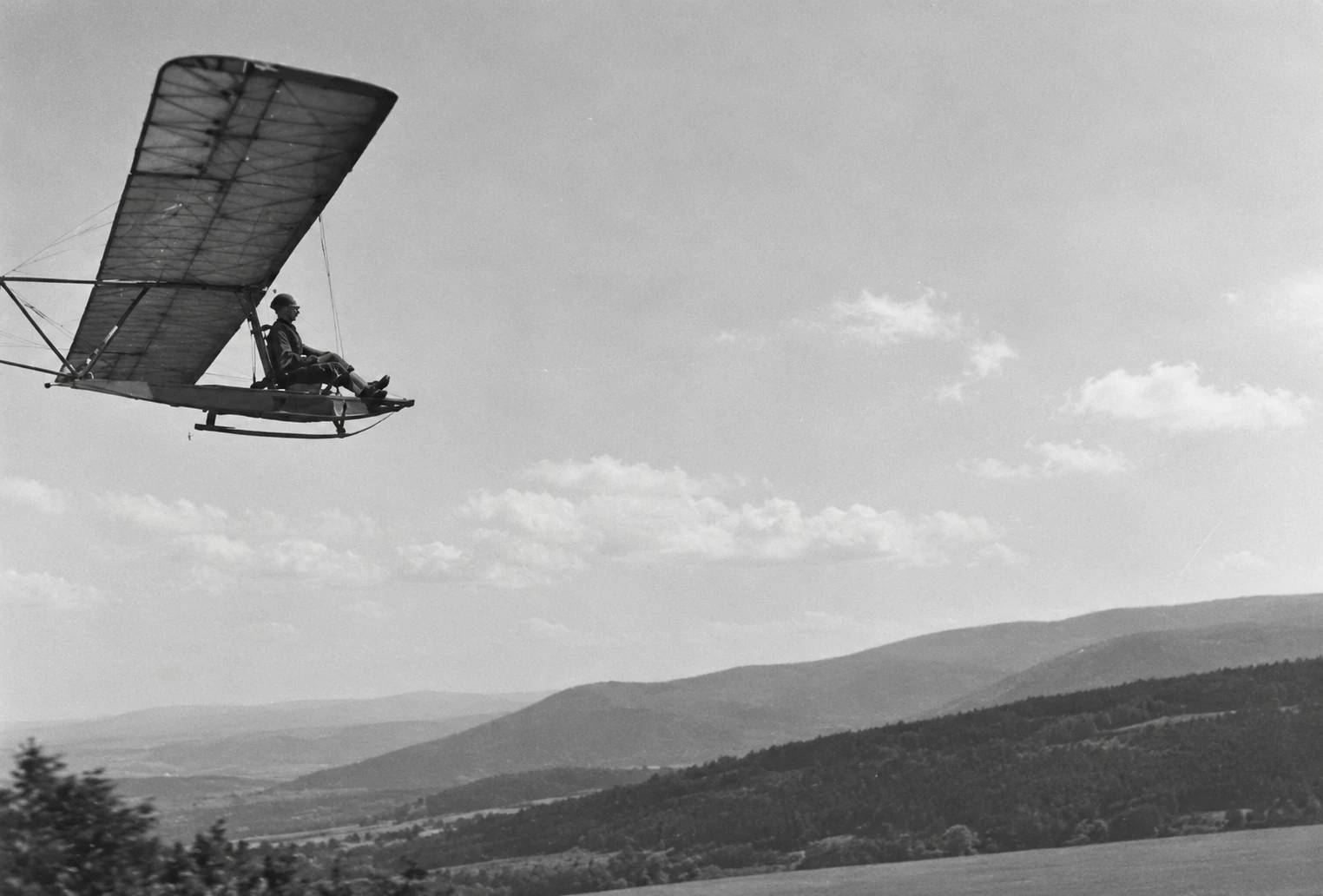
Some of the best performances achieved at the site:
- best duration: over 15 hours, Hajdučík;
- best altitude: over 3,000 m gross, Suchál;
- best distance: Horné Orešany – Parkáň, Suchál;
- Horné Orešany – Komárno, Ing. Čaučík;
- and numerous cross-country flights over 50 km, flights exceeding 1,000 m, and five-hour flights.
Many of today’s Slovak Silver C holders completed their qualifying flights at Horné Orešany.
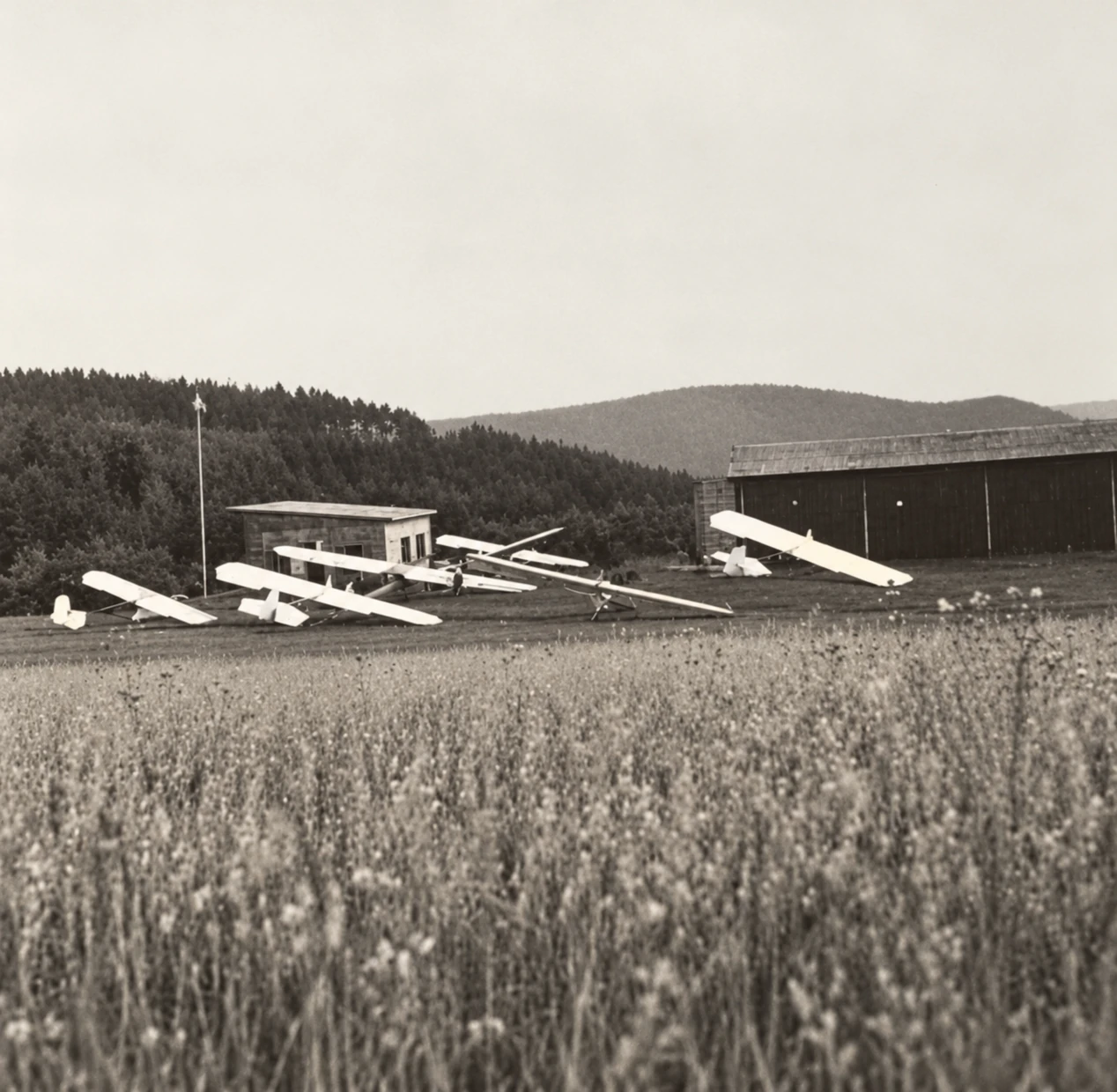
A large number of gliders can soar on the ridge in complete safety. The previous maximum of eight gliders simultaneously above the slope will surely be exceeded this year with no reduction in safety.
The home branch is SNA Trnava. SNA Senica and SNA Brezová pod Bradlom also fly here, while SNA Bratislava organises visits lasting two to three weeks every year. Interestingly, the Bratislava glider pilots logged almost 400 hours during those few days and earned several Silver Cs.
This year, PO Zbrojovka Brno visited over the Whitsun holidays, but after a winch failure they ‘threw in the towel’ and left early, even though SNA Trnava members repaired the winch overnight and soared all the following day in a northwesterly wind.
Besides the branches mentioned above, the local PO Orešany, which is part of SNA Trnava, also flies at the site.
To give a clearer picture, here are rough estimates of wind directions over the year, expressed as percentages:
- northerly to westerly winds — 50%;
- southerly to southeasterly winds — 30%;
- southwesterly and easterly winds, and calm conditions — 20%.
These figures clearly demonstrate the usefulness of this site.