

Alojz Zábrodský
I first met Lojzo Zábrodský at the AK Bratislava veterans’ club on Dulovo Square. He was almost 89, headed the club, and his word carried weight. I think he was used to his word carrying weight. From Lojzo and Jožo Schill, I learned what flying at Dúbravka had been like, where they had both started out. Lojzo also brought me his box of photographs and reminisced about his flying.
One of the first myths he debunked was that there had been no flying during the Slovak State. That was just one of the pieces of communist propaganda with which they completely overran our history, so much so that we still cannot untangle ourselves from it today. There was flying, and plenty of it. Lojzo regularly contributed articles to Slovenské krídla and the post-war Letecké noviny Bratislava. As an accomplished glider and cross-country pilot, he had plenty to write about.
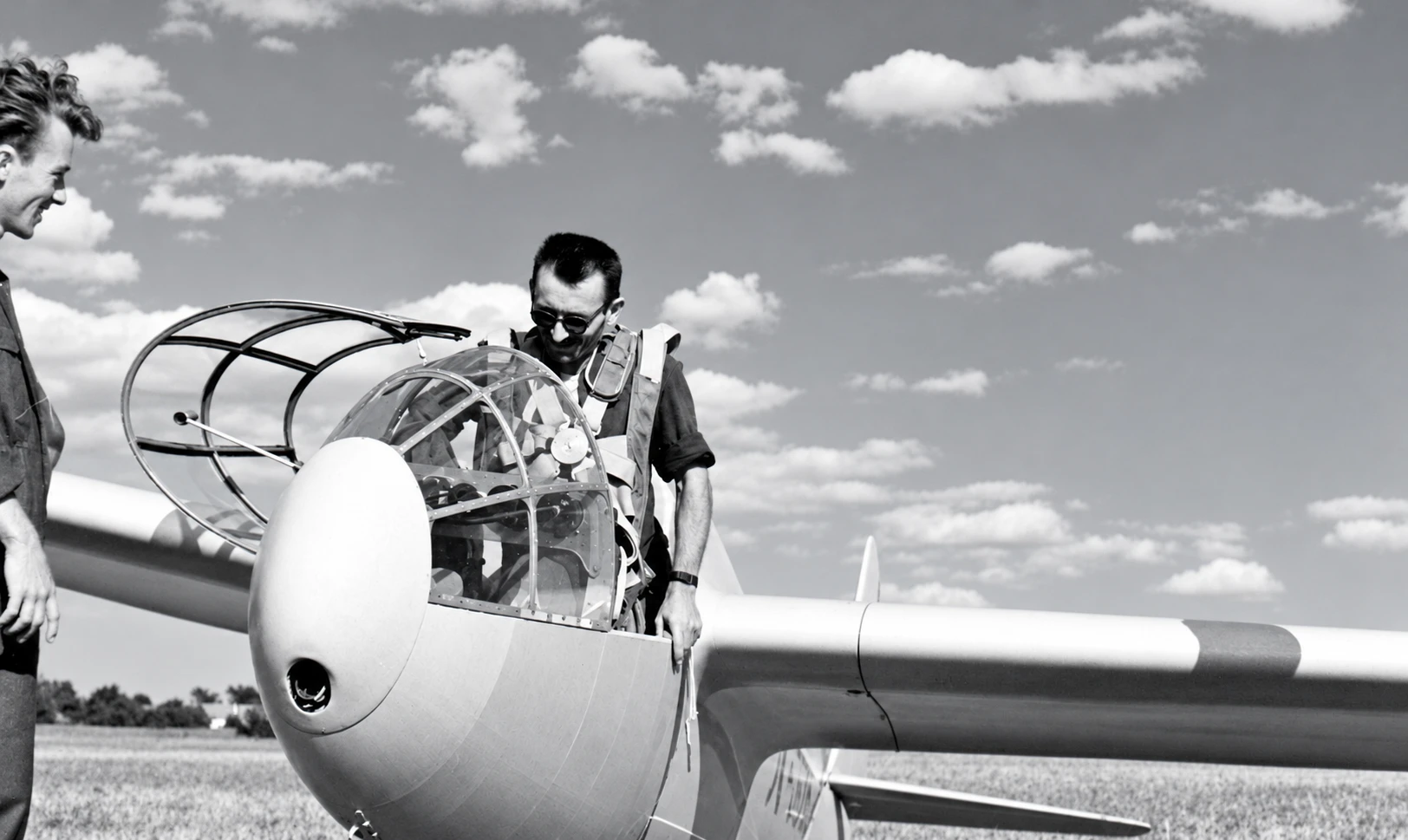
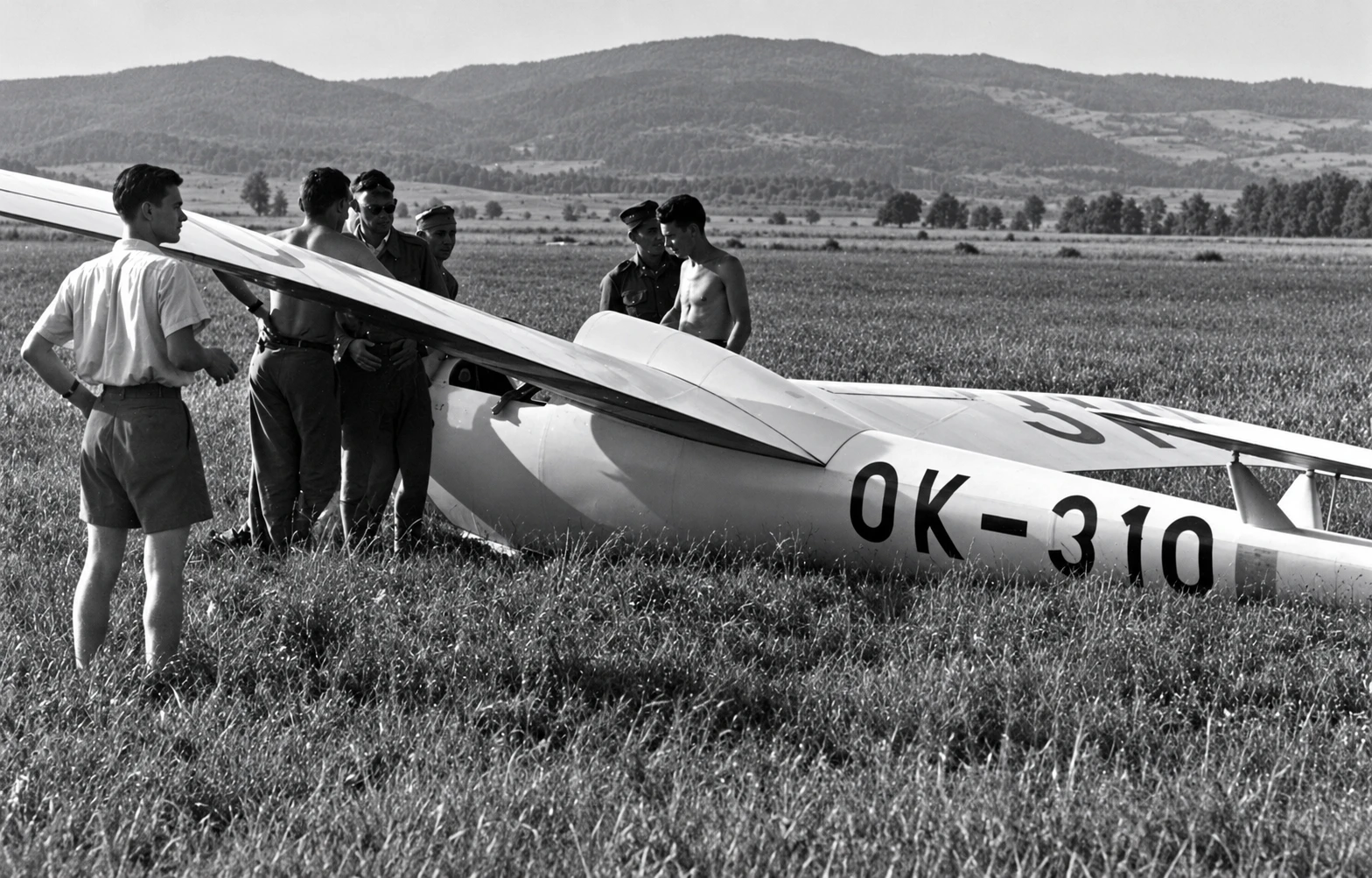
According to notes on the confiscation of German gliders from the training centre, Lojzo was assigned an Akaflieg Mü17 Merle glider, but photographs also show him flying the beautiful VSB-37 glider. Two examples flew in Slovakia, namely OK-300 and OK-310.
As early as 1946, he successfully met the requirements for the Silver Gliding Badge (number 6 / 21) as a pilot of Aeroklub Bratislava, and in 1953 he became only the ninth holder of the FAI Gold Gliding Badge, this prestigious international award, in all of Czechoslovakia.
Lojzo was also said to have held a slope-soaring endurance record, but I have been unable to find specific details. Such flights often lasted 12 hours or more, with slope soaring continuing through the night.
Remembering Orešany
Information about flying at the Orešany slope airfield was another valuable contribution from Lojzo.
Alojz Zábrodský
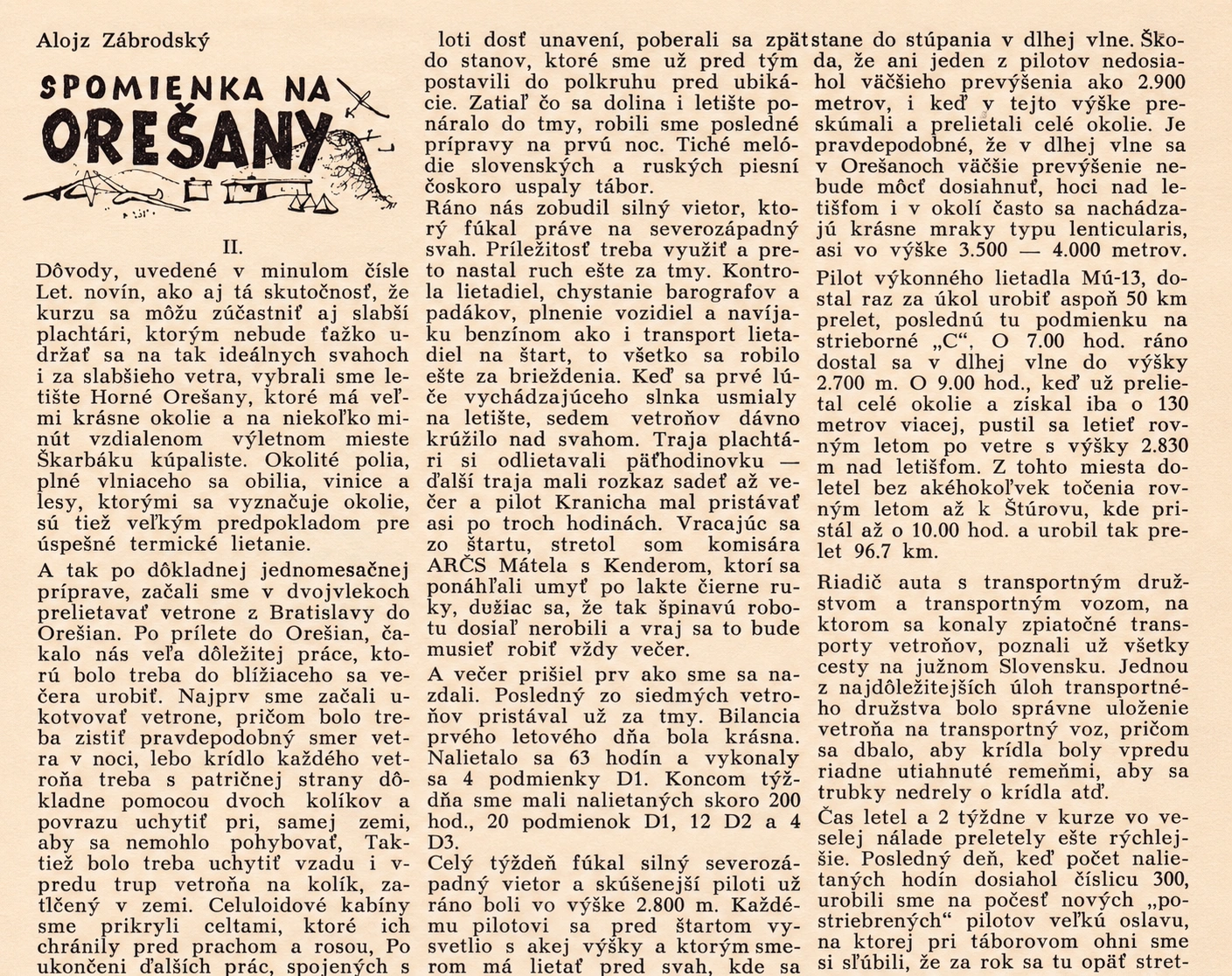
English translation of an AI transcription adapted into contemporary Slovak. Letecké noviny, 1 November 1950.
The reasons given in the previous issue of Letecké noviny, together with the fact that less experienced glider pilots could also attend the course and would have little difficulty staying airborne on such ideal slopes even in lighter winds, led us to choose Horné Orešany airfield. Its surroundings are beautiful, and the Škarbák excursion spot, just a few minutes away, has a swimming pool. The surrounding fields of waving grain, vineyards and forests also provide very good conditions for successful thermal soaring.
After a thorough month of preparation, we began ferrying the gliders from Bratislava to Orešany in double aerotows. On arrival, plenty of important work awaited us, all of which had to be finished by evening. First we began tying down the gliders. We had to estimate the likely direction of the night wind, because one wing of each glider had to be securely fastened on the appropriate side, close to the ground, using two pegs and a rope so that it could not move. The front and rear of the fuselage also had to be secured to pegs driven into the ground. We covered the celluloid canopies with tarpaulins to protect them from dust and dew.
After the remaining work of preparing dinner and accommodation, the tired pilots made their way to the tents, which we had already pitched in a semicircle in front of the accommodation quarters. As the valley and airfield sank into darkness, we made the final preparations for our first night. The quiet melodies of Slovak and Russian songs soon lulled the whole camp to sleep.
In the morning, a strong wind blowing directly onto the north-west-facing slope woke us. We had to make use of such an opportunity, so activity began while it was still dark. Checking the aircraft, preparing barographs and parachutes, refuelling the vehicles and winch, and taking the gliders to the launch point all took place at dawn.
By the time the first rays of the rising sun appeared over the airfield, seven gliders were already circling above the slope. Three pilots were attempting the five-hour flight requirement, another three had instructions not to land until evening, and the Kranich II pilot was to land after about three hours.
Returning from the launch point, I met ARČS commissioner Mátel and Kender. They were hurrying to wash their hands, black up to the elbows, claiming that they had never done such dirty work before and apparently would have to do it every evening.
Evening came sooner than we expected. The last of the seven gliders landed after dark. The first flying day’s results were excellent. We flew 63 hours and completed four D1 requirements. By the end of the week, we had flown almost 200 hours and completed 20 D1, 12 D2 and four D3 requirements.
A strong north-westerly wind blew all week, and the more experienced pilots were reaching 2.800 m as early as the morning. Before take-off, we explained to each pilot the altitude and direction from which to fly out in front of the slope to enter the wave lift at a predetermined point.
It was a pity that none of the pilots achieved a height gain greater than 2.900 metres, although they explored and flew all around the area at that height. It is likely that no greater height gain can be achieved in the wave at Orešany, even though beautiful lens-shaped lenticularis clouds often appear over the airfield and its surroundings at approximately 3.500 to 4.000 metres.
One day, the pilot of the high-performance Mü-13 glider was tasked with making a cross-country flight of at least 50 km, the final requirement for the Silver Gliding Badge. At 7 a.m., he climbed in the wave to 2.700 m. At 9 a.m., having explored the whole area and gained only another 130 metres, he decided to continue straight downwind from 2.830 m above the airfield.
From there, he flew straight without a single circle all the way to Štúrovo, where he landed at 10 a.m., completing a cross-country flight of 96.7 km.
The driver, retrieve crew and glider transport vehicle already knew all the roads of southern Slovakia. One of the retrieve crew’s most important tasks was loading the glider correctly onto the transport vehicle. They made sure that the wings were properly secured at the front with straps, and that tubes and other parts of the structure did not rub against the wings during transport.
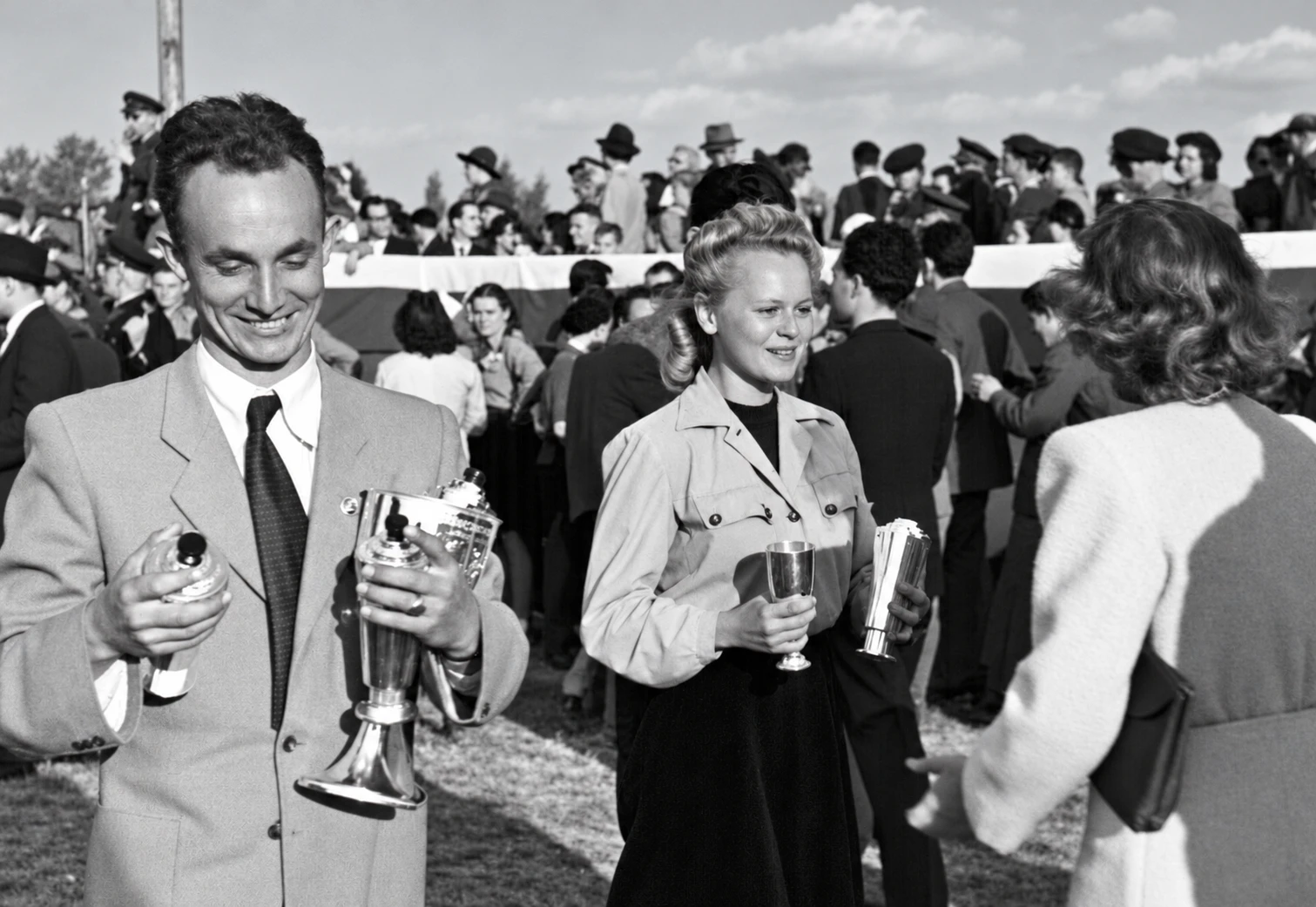
Time flew, and the two cheerful weeks of the course passed even faster. On the final day, when the total flying time reached 300 hours, we held a big celebration in honour of the new Silver Gliding Badge holders. Around the campfire, we promised to meet here again the following year.
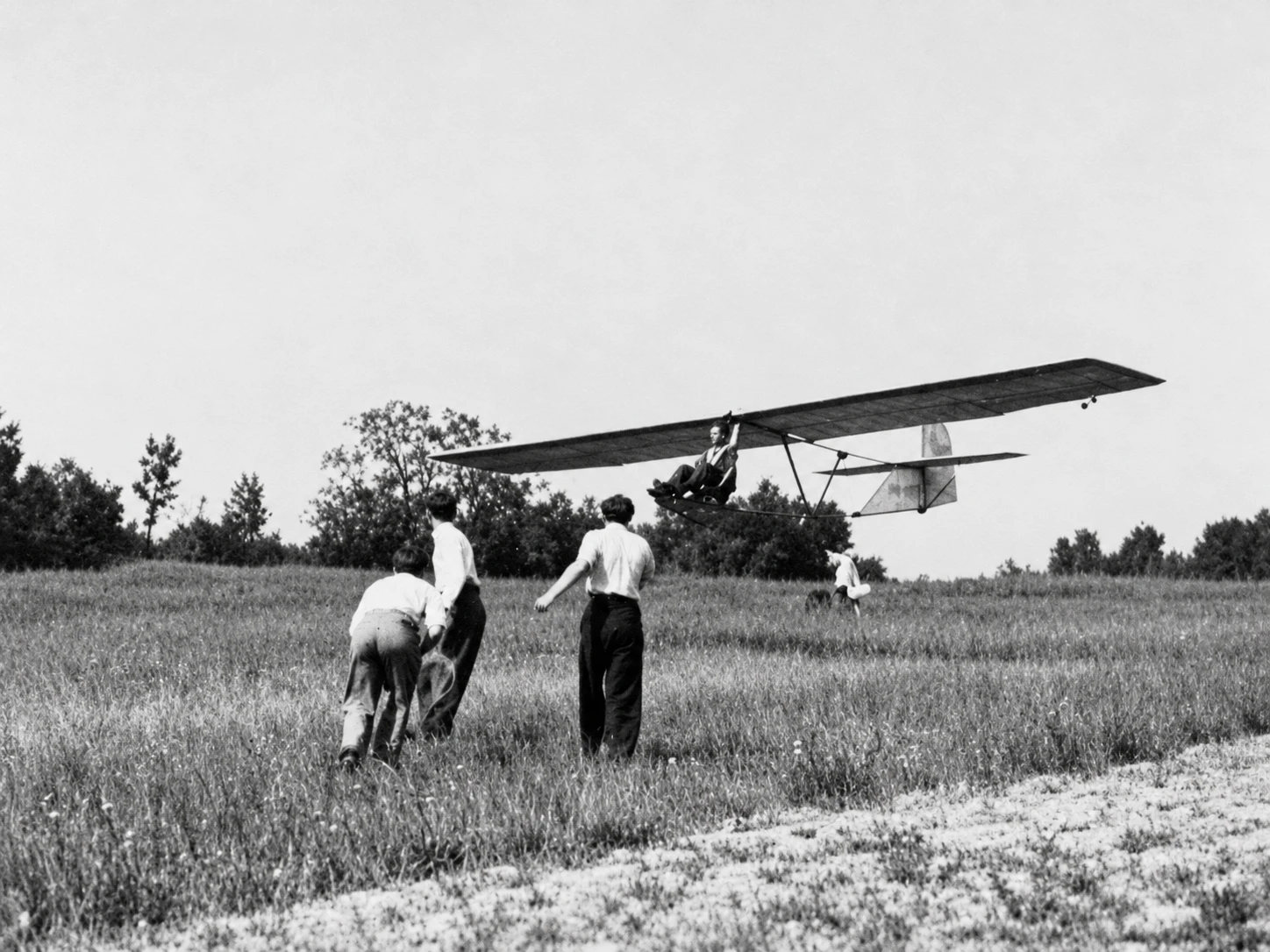
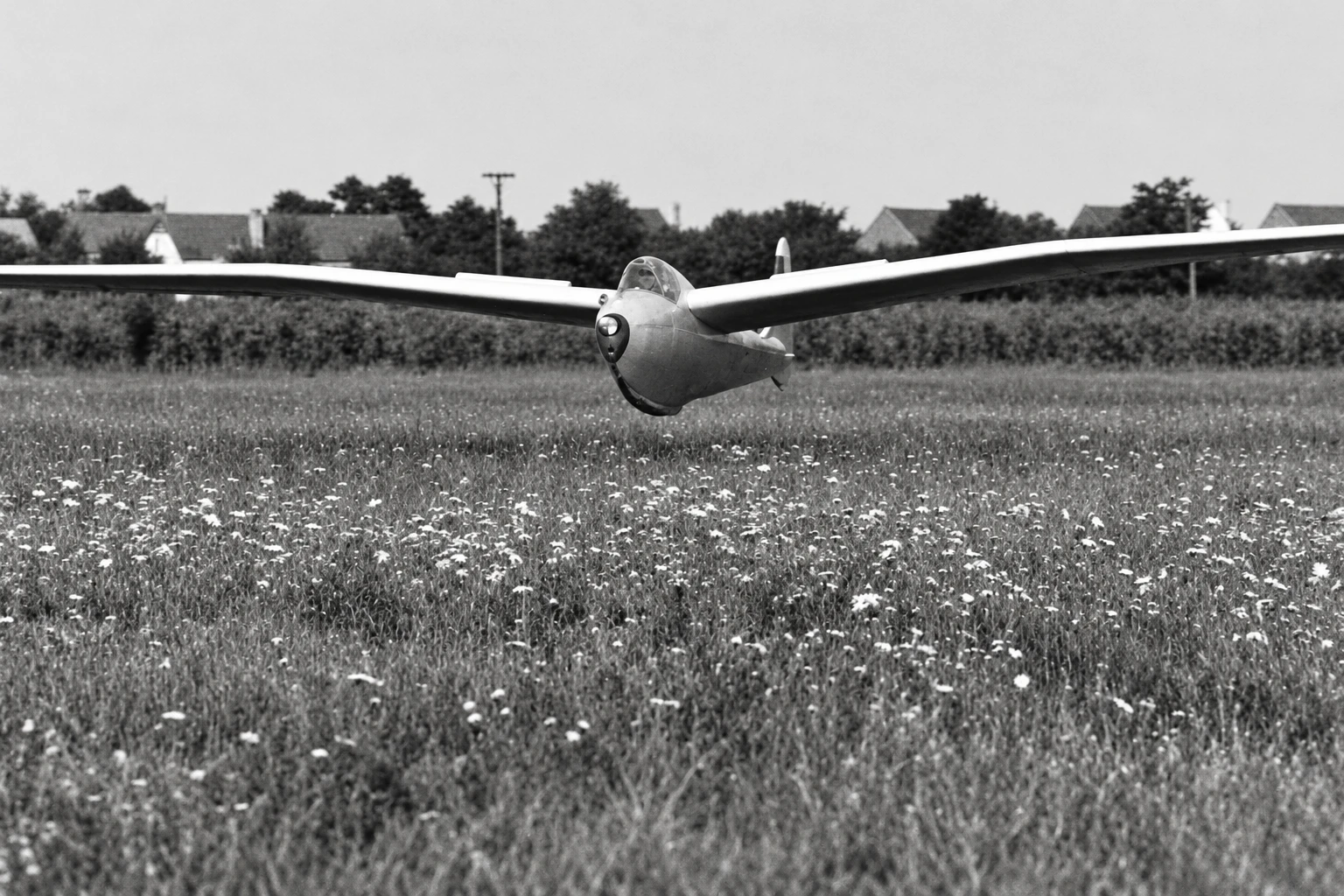
This should be a Gleiter on a slope in Pezinok. I know that Pažiť airfield existed in Pezinok during the First Czechoslovak Republic, and of the Aeroclub airfield in Pezinok after WWII, but a slope? I don’t know; I have no idea where it could have been in this small town.
← Dúbravka slope airfield